
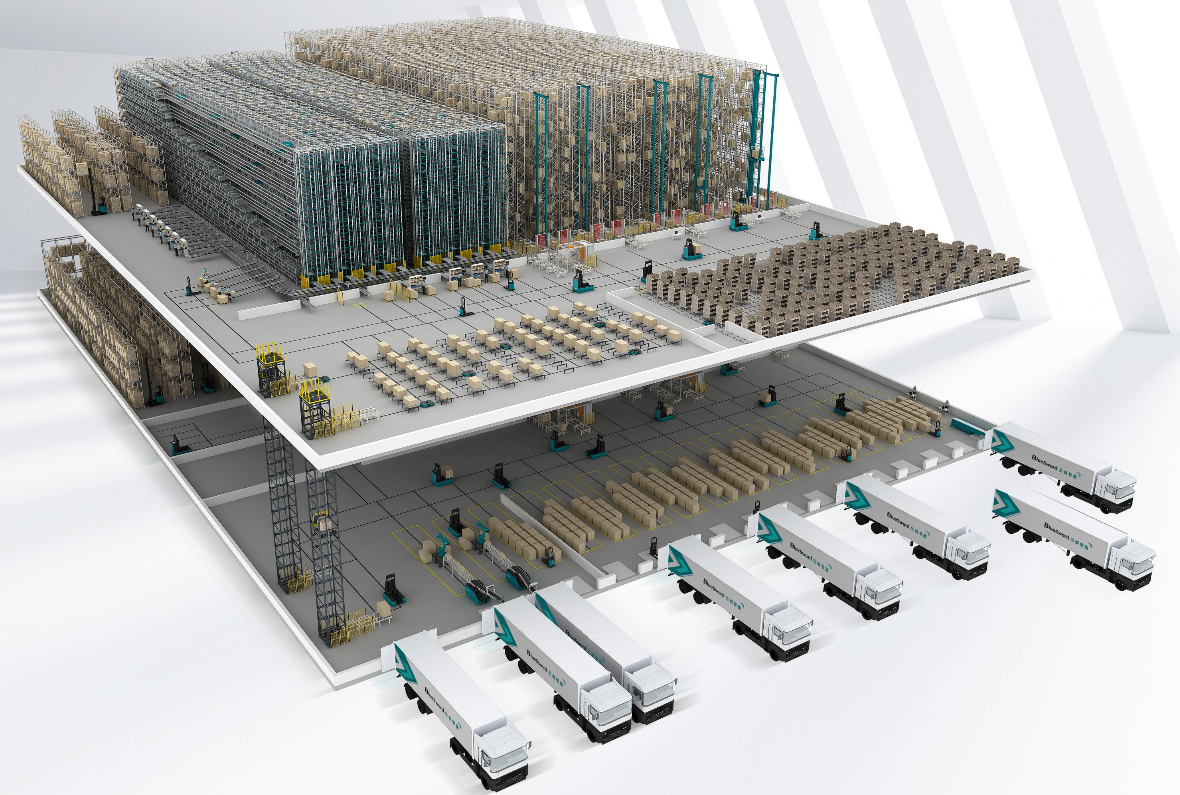
A speculative lead into practical change
The warehouse of 2030 feels like motion already—lanes that breathe, conveyors that anticipate peaks, and racks that rearrange around demand. Start by treating your facility layout as a living map: pathways for throughput, nodes for sortation, and buffers that hold tempo. Early conversations with a warehouse logistics solution company will reveal how a conveyor spine can free space and compress cycle times, a concept rooted in the 2020–2021 e‑commerce surge that forced rapid reconfiguration across global fulfillment centers.
Core principles for integrative design
Plan conveyor placement against human work and automated touchpoints. Prioritize straight, predictable runs to preserve conveyor speed and reduce wear; provide clear pick-face access and dedicated buffer lanes where manual replenishment meets automation. Keep mezzanine and pallet-flow zones modular so you can re-route lines with minimal downtime. Small changes to flow geometry often yield outsized gains in throughput and reduce reliance on ad-hoc labor routing.
Technology choices that matter
Match hardware to intent: low-speed belt conveyors for sorting and accumulation conveyors for buffering; incorporate PLC logic that coordinates stops and starts for sortation accuracy. Integrate sensors and simple control systems before adding full warehouse control software—this prevents misaligned expectations and keeps commissioning predictable. For many facilities, the right mix of sortation, conveyor, and a reliable PLC will deliver the most dependable performance curve.
Common mistakes seen in retrofit projects
Teams often crowd conveyors into existing aisles without reconsidering SKU density or pick patterns—result: frequent rework and blocked aisles. Another frequent error is under-sizing buffer capacity; it looks efficient until a peak wave fills the system and forces stops. And teams sometimes treat conveyors as island systems, ignoring upstream and downstream constraints. —It’s a subtle failure mode: great hardware, poor systems thinking—avoidable with early systems mapping.
Practical roadmap and the operational teardown
Begin with a simple four-step rollout: map current flows, run a throughput model, place conveyors to reduce touches, and pilot a single lane under live load. Use trial volumes to validate sortation accuracy and average cycle time. In the operational production teardown, note {main_keyword} and {variation_keyword} to map performance baselines; record SKU variability and peak wave profiles. Pilot at minimal risk areas, tune PLC parameters, then scale lanes into primary picking zones. Bring a logistics systems integrator or logistics solutions provider into the loop early to align mechanical, electrical, and controls scope.
Advisory close — three golden rules
Metric 1: Measure throughput per linear meter of conveyor — target improvements of 10–25% before wide rollout. Metric 2: Track mean time between stoppages (MTBS) after integration; choose designs that double MTBS versus legacy lanes. Metric 3: Monitor touches per order from pick-face to pack; aim to reduce this by at least one touch through conveyor routing. These evaluation metrics keep decisions tangible and tie layout choices to measurable operational gain. Integrating conveyors changes rhythms on the floor, and the right partner helps translate that change into steady gains. BlueSword. Future-ready flow.