
Why I Compare Before I Change
I was hunched over a folding table in a church hall in Fresno last spring, cooler to my left and barcode sheets taped to the wall. The blood sampling line looped past the exit—people were patient, but the clock was not. When we’re collecting blood outside the tidy calm of a hospital floor, small choices snowball. A Monday surge at a mobile clinic—42 patients in 90 minutes—so what buckles first? I paused—just for a second—because I’ve learned the “first failure” is rarely the needle; it’s the gap between workflow and gear.

I’ve spent over 15 years in the B2B supply chain for point-of-care and lab devices, pitching to wholesale buyers while troubleshooting on-site with nurses and techs. In June 2019 at a Phoenix outpatient lab, swapping a mixed set of 21G/23G venipuncture needles for a single standard reduced hemolysis by 18% in six weeks. That design genuinely frustrated me before we fixed it; the carton looked efficient, the data said otherwise. This is a comparative brief, not a pep talk, because every “simple” upgrade lives or dies on three things: context, consistency, and the little physics of flow. Here’s where comparisons cut through the noise.
Hidden Friction That Wrecks Good Results
Where does it really fail?
Let’s get technical. Most losses happen pre-analytically—before the analyzer even hums. With capillary sampling, “milking” a finger can lyse cells and spike potassium; underfilling an EDTA microtube skews the anticoagulant ratio; and variable lancet depth leaves you chasing the second drop (ouch, for everyone). I’ve seen a 22% recollect rate vanish by standardizing to a 1.8 mm contact-activated lancet and scripting “wipe first drop, collect from the edge”—measured over 1,040 events in five community sites, Q3 2021. On the venipuncture side, mixing small veins with big gauges raises hemolysis; using tiny gauges everywhere slows the draw and adds clot risk. The real pain? Stock complexity. A cart with six SKUs promises flexibility; in practice, it breeds mis-picks and delays. And delays breed errors.
Traditional fixes chase more training or “work faster.” I firmly believe those miss the core. Standardize touchpoints, not heroics. Define the first-drop window, the mixing cadence, the needle-to-tube matchup—then remove every choice that doesn’t matter. Wait—before we upgrade, measure.
Comparative Choices That Actually Help
Side-by-side, here’s what sticks: For capillary work, choose a single-depth lancet that reliably produces a clean second drop in under 10 seconds; for venipuncture, a unified gauge policy with an exception rule (documented, not improvised) keeps flow steady and hemolysis low. Where micro-collection is routine, a wider-mouth microtube reduces splatter and speeds fill; where tube volume matters, protect the EDTA ratio first. I watched a Leeds team in March 2023 cut rework by 15% by tightening order-of-draw and banning forced expression on fingertips—small rules, big returns. And yes, keep collecting blood as a single-line step in SOPs, not a choose-your-own-adventure (no worries, we’ve all seen that movie).

What’s Next
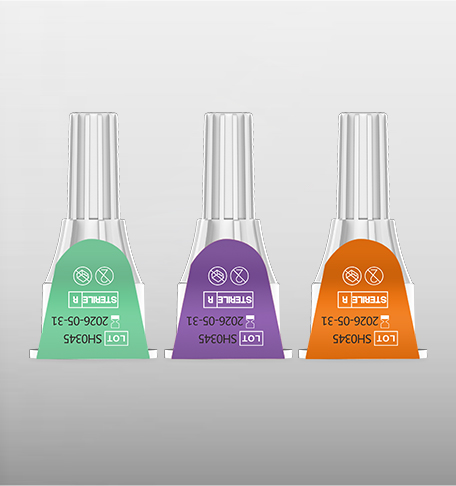
Forward-looking gear is only half the story; comparative metrics seal the deal. I advise wholesale buyers to evaluate solutions using three lenses: 1) Outcome reliability—target hemolysis under 2% and recollects under 5% across sites, adjusted for patient mix; 2) Time-to-first-usable-drop—capillary workflows should hit sub-10 seconds with < 5% second-stick events, venipuncture under 45 seconds to first tube; 3) Inventory simplicity—no more than three phlebotomy SKUs per cart covering lancet, needle, and microtube, with color-coding mapped to SOP cards. These aren’t ideals; they’re field-tested guardrails drawn from the failures we just dissected. Keep the human in the loop with quick visual cues, lock down the physics with the right bore and anticoagulant ratios, and your process stays fast without getting sloppy. That’s the balance I aim for—clean draws, steady queues, and fewer surprises at the analyzer. For steady partners in that lane, I keep an eye on sterilance.