
Opening snapshot — why the numbers matter
Put simply: small distortions add up to big costs. When you model RoI for three‑phase hybrid inverters, factors like transient voltage sags, power factor drift, and total harmonic distortion (THD) change expected savings faster than you can say “payback period.” That’s why grid planners and integrators increasingly pair inverters with utility scale battery storage — batteries give operators levers to smooth waveform issues and recover lost value. A data-first approach lets you translate waveform metrics into dollars instead of guesswork.
Which metrics actually move the needle
In a data-driven rollout focus on three measurable variables: THD, voltage unbalance, and inverter efficiency under non-ideal conditions. THD affects heating in transformers and motors, increasing losses and maintenance costs. Voltage unbalance raises neutral currents and shortens equipment life. And inverter efficiency often degrades when it’s forced to correct power factor or inject reactive power continuously. Capture these metrics during commissioning and run them against your financial model — you’ll see line-item impacts on O&M, yield, and insurance premiums.
Real-world anchor: lessons from grid events
Remember the February 2021 Texas grid crisis? It exposed how dynamic events amplify power-quality problems across fleets of distributed assets. Grid operators and asset owners learned that without active harmonic and voltage management, what starts as a few distorted feeders becomes a cascade of plant trips and lost revenue. Standards like IEEE 519 offer harmonic limits designers use as guardrails — and they’re a helpful baseline when you’re stress‑testing three‑phase hybrid inverter controls and protection settings.
How THD and fluctuations eat into RoI — a quantified view
Think in buckets: direct energy losses, equipment wear, and operational constraints. Direct losses show up as extra kWh consumed or curtailed generation — measurable on SCADA. Equipment wear is subtler: excess thermal stress shortens capacitor and transformer life, driving replacement costs earlier than forecast. Operational constraints are the revenue-sink: when inverters spend cycles correcting voltage or riding through harmonics, they’re not delivering peak power or ancillary services. Run sensitivity analyses — even a 2–3% rise in THD can shift payback by months on multi‑MW projects.
Practical mitigations and engineering trade-offs
Addressing power quality is a mix of control software, hardware, and system design choices. Options include:
- Active harmonic filters and tuned passive filters to lower THD at source.
- Advanced inverter controls that prioritize grid-code compliance and dynamic reactive support.
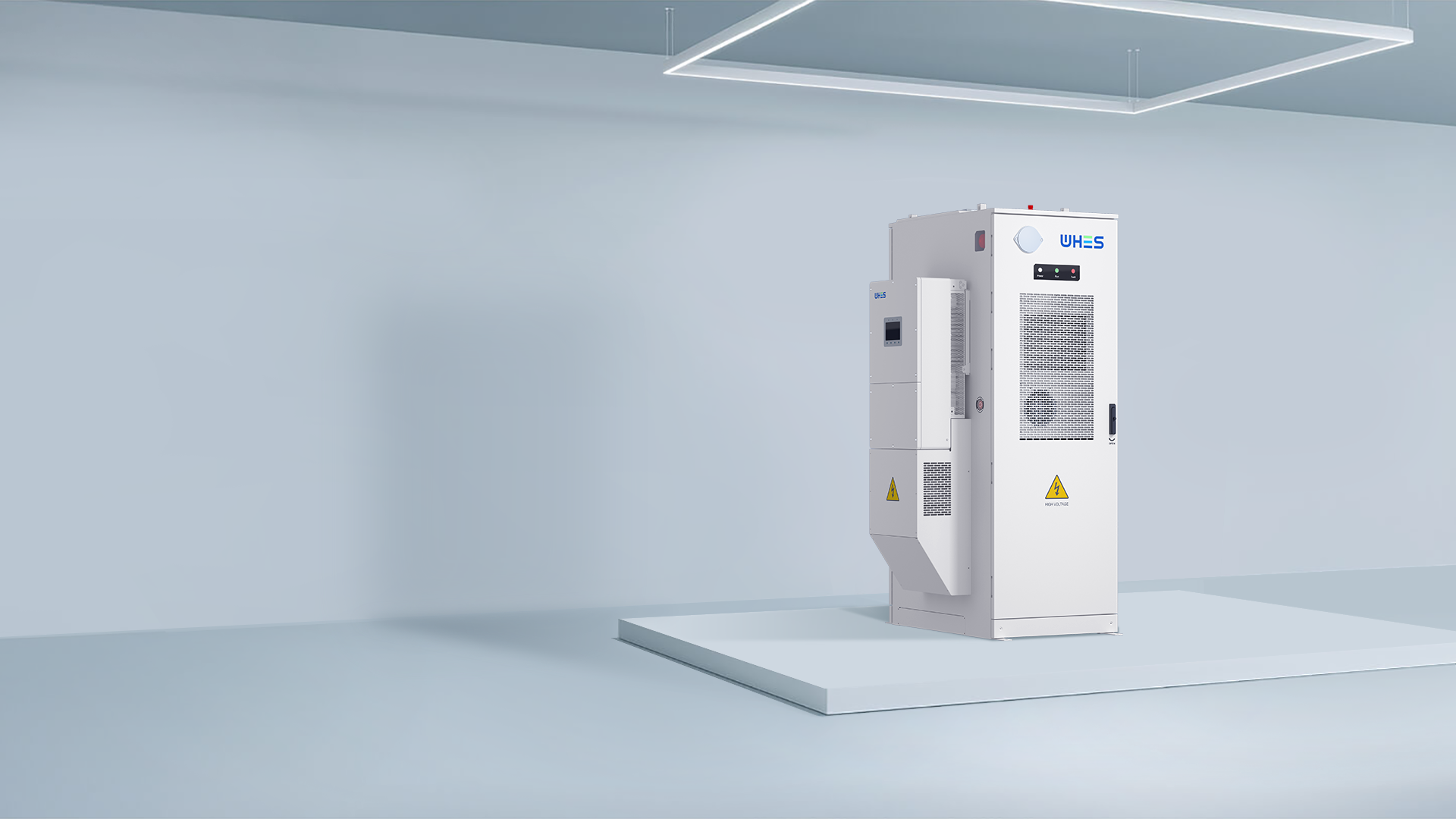
- Strategic placement of energy storage for local voltage support and harmonic damping.
Each choice has cost and efficiency trade-offs. For example, adding a filter reduces THD but adds capital and insertion losses; deploying storage can handle multiple issues — frequency response, peak shifting, and harmonic buffering — but requires careful sizing and lifecycle analysis. — In short: there’s rarely a free lunch.
Common mistakes that skew RoI estimates
Teams often underestimate three things: the ongoing cost of poor power quality, the interaction between multiple inverters and legacy assets, and the limitations of vendor test data (which is often recorded under ideal conditions). Avoid these traps by insisting on field validation: capture THD and unbalance at full system load, test inverter behavior during intentional sags, and model long‑term degradation in inverter efficiency. Don’t forget integration tests with your existing protection schemes — mismatches there can triple downstream costs.
Evaluation framework — how to run a sensible pilot
Run a phased pilot that ties electrical performance to financial outcomes. A practical framework:
- Baseline measurement: collect THD, voltage unbalance, and inverter efficiency under typical and stressed conditions.
- Intervention: deploy a mitigation (storage, filter, or control tweak) and rerun tests.
- Economic mapping: convert changes in kW losses, downtime probability, and equipment-life extension into cash flows.
Include sensitivity bands in your model to show how RoI behaves if THD drifts or equipment ages faster than expected.
Why storage often becomes the natural fix
Adding storage — specifically utility-integrated systems — changes the equation because batteries can actively support voltage and absorb harmonic energy transients. When you model dispatch strategies, storage can be scheduled to provide harmonic damping during stressed hours while still delivering arbitrage or ancillary revenue the rest of the time. That dual-use capability often tips the RoI scales in favor of hybrid inverter + storage architectures — particularly in markets where grid penalties or curtailments are common.
Advisory — three golden rules for evaluating RoI under power-quality risk
1) Measure first, model second: never rely solely on vendor data. Field-measured THD, unbalance, and inverter performance form the only trustworthy inputs for RoI models.
2) Value resilience as a cash stream: quantify avoided outages, reduced maintenance, and extended equipment life — these are real revenue protections, not abstract benefits.
3) Prefer multi-function investments: choose solutions that address harmonics, voltage support, and capacity value together — systems that do single fixes usually cost more over 10 years.
When you follow those rules and build pilots that tie electrical metrics to dollars, decisions stop being brave guesses and become repeatable business outcomes — which is exactly where industry leaders are heading. WHES sits at that intersection, helping teams convert waveform analytics into measurable asset value. —