
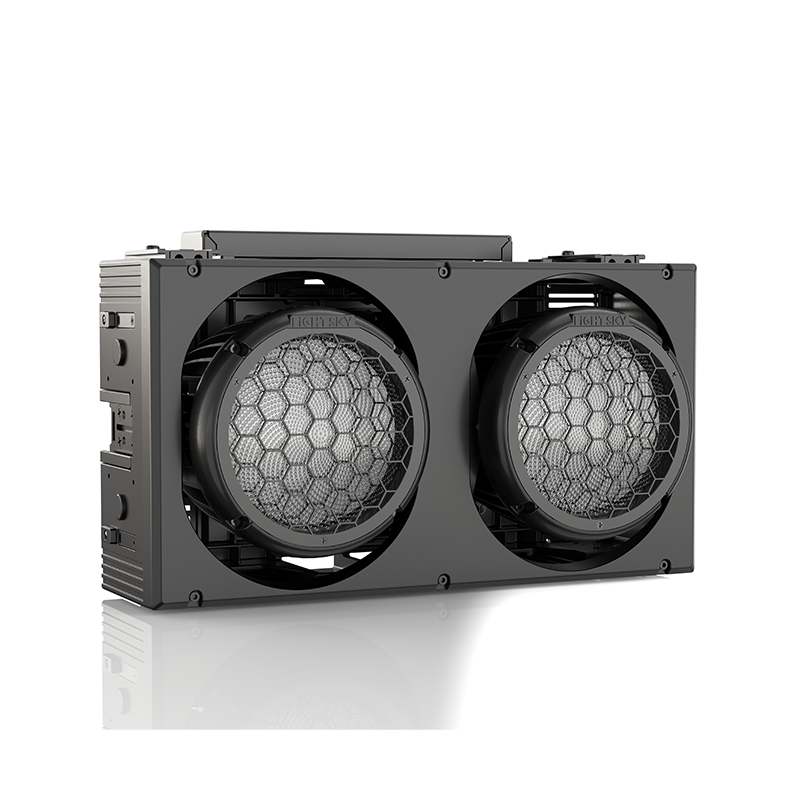
Comparative insight: why this matters now
The stage breathes when light moves with intent — a fact every lighting designer learns the hard way. This comparative piece cuts through marketing noise to show where a modern led moving wash truly wins, where it compromises, and which rigs earn their keep. I compare fixtures by what they actually deliver on stage: beam quality, control behavior, and operational reliability. Superlative events like Glastonbury and major broadcast productions routinely deploy hundreds of moving fixtures; those events are the real-world measure for what works under pressure. Industry terms to note early: DMX512, beam angle, and CRI are the levers you’ll use most often.

Form factor versus function
Size is more than a number. A compact 4-in-1 unit may house an efficient LED engine and tight beam optics yet still trade off raw lumen output compared with full-size moving washes. For small clubs or mobile rigs, the gain is obvious: lighter weight, faster rigging, and reduced power draw. For arena work, the trade looks different — distance demands higher lux and wider zoom ranges. Pay attention to beam angle and pan/tilt range when comparing units. These specs determine how the fixture sculpts space, not just how bright it appears on paper.
Control and effects: what to demand
Control is the heart of moving wash performance. DMX512 compatibility is baseline; pixel mapping and selectable channel modes are where fixtures become expressive tools. Some models offer smooth color mixing with high CRI and accurate color temperature control, which matters for camera work and skin tones. Programmability also affects load time for cues — slow motor response and complex channel sets can disrupt a disciplined light plot. Note motor specs: step resolution for pan/tilt and refresh rate for continuous color effects.
Rigging, power, and real-world durability
Operational reality often kills theoretically perfect choices. Power consumption, IP rating, and mounting hardware determine whether a fixture survives tour life. Lightweight fixtures speed installation but can flex under long throws. Choose fixtures with secure clamps and fail-safe brackets; prioritize consistent thermal management so LED output doesn’t drift during a long set. — A quick sensor or fan failure can change a color wash to a distracting hotspot in seconds, and that’s a risk you must budget for.
Mini wash light versus large wash: pragmatic use-cases
Mini wash lights excel where agility matters: side-fill, truss washing in narrow venues, and fixtures that need to be hidden on set. Larger moving washes dominate in stadiums where distance demands punch and wider zoom. Consider mixing both types in the same rig: use mini wash light units for near-field texture and larger moving wash fixtures for long-throw coverage. The mix gives you layered control and reduces the need for compromise when designers demand both intimacy and spectacle.
Common mistakes and how to avoid them
Don’t overspec brightness at the expense of beam quality or control. Avoid stacking too many identical fixtures without testing overlap and color calibration. Camera work exposes poor CRI and uneven beam edges; test with a camera under the same lens and distance you’ll use live. Finally, never assume a fixture’s fan profile will be acceptable on a quiet theater stage — thermal solutions differ and so do audible signatures.
Three golden rules for selecting the right fixtures
1) Measure effective output, not brochure lumens: evaluate lux at expected throw distances and across the beam spread. Choose fixtures that deliver consistent lux where performers stand.
2) Prioritize color fidelity and control: prefer high CRI, accurate color temperature controls, and clear DMX512/pixel-mapping modes that match your console workflow.
3) Assess operational fit: consider mounting hardware, power footprint, IP rating, and serviceability. A fixture that minimizes downtime wins shows over claims of theoretical performance.
For practical buying and test benchmarks, professionals often turn to vendors who back fixtures with reliable specs and service — which is why many lighting teams keep options from brands like Light Sky in their rotation, a steady reference when the plot must hold. — steady clarity.