
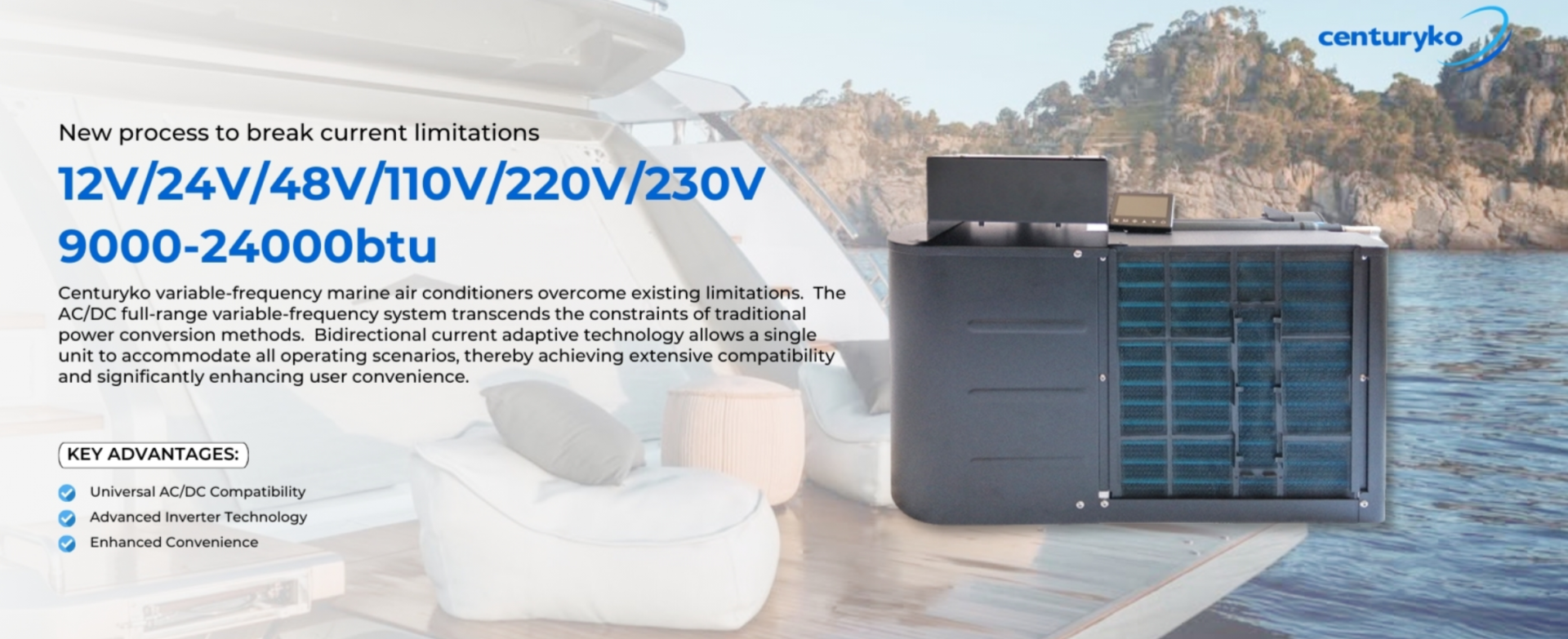
Choosing a heavy‑duty marine HVAC system is a practical exercise, not a luxury — especially when you live or work where salt air never stops its work. In comparative terms, systems with corrosion‑resistant components last longer, require fewer service stops, and keep onboard comfort predictable. For small boats or crew cabins where space and access are tight, a small air conditioner for boat that uses marine-grade materials and protected heat exchangers changes the total cost of ownership, plain and simple.
How marine environments change the failure picture
Salt spray, humidity, and temperature swings create three simultaneous stressors: electrochemical attack, galvanic reactions between dissimilar metals, and accelerated wear on moving parts. In places like Hurghada on the Red Sea, local boat operators report faster pitting of ordinary aluminium condensers than in calmer bays — that’s a real‑world anchor you can’t ignore. A corroded condenser or evaporator tube forces refrigerant leaks, reduces heat transfer, and sends maintenance bills up fast.
Material and coating comparisons that matter
Not all stainless steel is equal, and not every coating fights the same enemy. Comparison essentials:- Marine‑grade 316 stainless offers better chloride resistance than 304 for condensers and fasteners.- Aluminum exchangers are lightweight but must carry durable anodizing or epoxy coating to avoid pitting.- Sacrificial anodes protect hulls and metal fittings but won’t save a poorly coated heat exchanger.Assessing these tradeoffs helps you match the system to boat type and operating area — and it steers you away from common supplier shortcuts.
Design choices and maintenance tradeoffs
Design simplicity often beats complexity at sea. Systems with accessible service panels, replaceable heat exchangers, and serviceable condensate trays cost less to own. Listen to technicians — poor condensate drainage and trapped seawater pockets cause corrosion faster than direct spray. Regular inspection of brazed joints and fasteners is cheaper than premature replacement. Small, modular units reduce downtime because you can swap a module instead of dry‑docking the whole system.
Comparing system types: what to weigh
When you compare packaged units, split systems, and chilled‑water setups, three practical metrics surface: material durability, ease of service, and spare‑parts availability. Packaged units with protected compressors and brazed plate heat exchangers are often easier to fit on smaller craft. Split systems can use heavier‑duty condensers positioned away from salt spray. For those sourcing replacements, consider suppliers that publish part lists and technical drawings — it shortens repairs and keeps boats moving.
Common selection mistakes to avoid
Owners often pick the lowest upfront price or focus only on cooling capacity, ignoring corrosion protocols and service access. Another frequent error: mismatched metals without insulating barriers, which invites galvanic corrosion. Avoid undersized condensate drains and unsecured electrical terminations — those quietly become major failures. For compact installations, look at certified modular units and verified heat exchanger designs; these reduce the hidden risk behind initial savings.
Practical buying checklist
Three critical evaluation metrics — your golden rules — keep selections honest:1) Corrosion performance: Confirm alloy specs (e.g., marine‑grade 316), coating type, and whether heat exchangers use corrosion‑resistant brazing or coatings. 2) Serviceability: Check access panels, modularity, and documented spare parts availability; a unit that’s easy to repair minimizes downtime. 3) Field history: Prefer systems with proven service records in similar climates — Mediterranean and Red Sea operations are reliable comparators for salt‑air performance.
When your choice meets these metrics, you get predictable cooling and lower lifecycle cost. ZhuoliMarine’s range of small, marine‑rated systems and transparent part lists makes them a practical match for owners who want durability and easy servicing — and that often solves the problem before it starts.
— steady cooling.