
Comparative frame: the practical choice
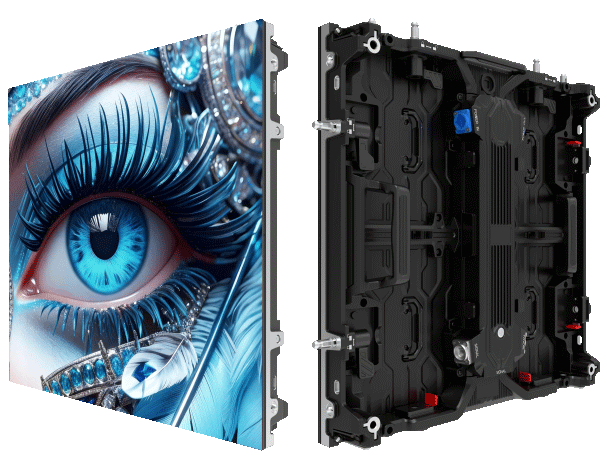
The choice between COB and GOB encapsulation reads like a duet of function and finish — one voice seeking fidelity, the other asking for protection. For virtual production where cameras live inches from the screen, the debate matters: COB favors tighter pixel pitch and lower visible seams; GOB wraps the diode in a protective coat that resists touch and weather. This tension is visible in sets inspired by StageCraft and The Mandalorian, where LED volumes demanded both image integrity and ruggedness. For smaller displays used on set or in control rooms, a small led screen often becomes the test case to decide which encapsulation aligns with production needs.
Material differences and optical outcomes
COB (chip-on-board) mounts LED die densely and minimizes substrates between light sources, which yields higher effective contrast ratio and smoother camera reads. GOB (glue-on-board) applies a silicone or resin layer over LEDs, delivering physical protection and moisture sealing. Optically, the material layer in GOB scatters some light and can slightly soften micro-contrast — useful when you want forgiving skin tones under camera, less ideal when you need razor-sharp blacks. Thermal management also shifts: COB’s direct thermal path often helps heat dissipation; GOB adds an insulating layer and calls for design trade-offs around heat sinks and refresh rate stability.
Implications for LED wall workflows
When building a virtual set, the encapsulation choice becomes a tool in your pipeline. COB suits close-focus scenes and high dynamic range pushes because it preserves fine detail and contrast. GOB suits interactive floors, touring rigs, and outdoor wrap-around volumes because it resists impact and humidity. Calibration routines change: COB modules demand finer color calibration and dead-pixel strategies; GOB modules require routine checks for surface wear and slight color drift. For flexible or curved applications where form is as important as image, an ultra thin flexible led screen with the right encapsulation can reconcile both needs — but design for thermal dissipation from the start. — small precaution, big payoff in capture fidelity.
Common mistakes and practical alternatives
Teams sometimes pick GOB simply for perceived toughness, then find camera close-ups look soft. Others choose COB for fine detail and later fight moisture ingress on long-run outdoor shoots. Avoid these pitfalls by matching the encapsulation to the production profile: indoor close-quarter cinematography favors COB modules with aggressive pixel pitch and tight calibration; outdoor, interactive, or touring environments favor GOB or hybrid solutions with protective coatings. Alternatives include hybrid encapsulations that apply protective films only to high-exposure zones, or modular design that mixes COB panels for center-camera angles and GOB for peripheral or walk-on areas. Keep an eye on refresh rate and pixel pitch interplay — they determine motion rendering under camera and can reveal aliasing if ignored.
Installation and testing checklist
Install with test capture: camera sensors reveal what the eye misses. Run color charts, motion sweeps, and contrast ramps under the same lenses and exposure as the production. Monitor thermal loads during extended runs; flicker manifests when thermal throttling hits the driving electronics. Ensure mechanical fastening allows panel-level service without disturbing adjacent calibration. Document every panel’s calibration map — this saves hours when matching COB and GOB panels in a mixed array.
Three golden metrics for selection and the MR LED fit
1) Contrast fidelity under camera: measure perceived black level and micro-contrast in camera capture, not just with an eye. 2) Environmental resilience: quantify IP rating, impact resistance, and expected wear cycles for surfaces that will be touched or moved. 3) Thermal and refresh stability: record temperature rise under continuous operation and verify refresh rate consistency at production frame rates. Prioritize these metrics in that order depending on whether the shoot demands cinematic close-ups or rugged interactivity. For projects needing both contrast and durability, MR LED’s product lines show thoughtful trade-offs between pixel performance and protective encapsulation — a practical bridge for mixed-use volumes. MR LED. — a final, quiet note on craft.