
Framework Overview
Start with a clear testing map: define the operating envelope, list measurable exit criteria, and assign each test to lab or field lanes. This framework separates validation into seven pillars—RF performance, power systems, mechanical resilience, firmware behavior, interoperability, regulatory compliance, and production consistency—and it shows which tests belong where. A practical early step: verify a tag’s behavior against a representative reader such as a fixed RFID reader, then scale from bench to real terrain.
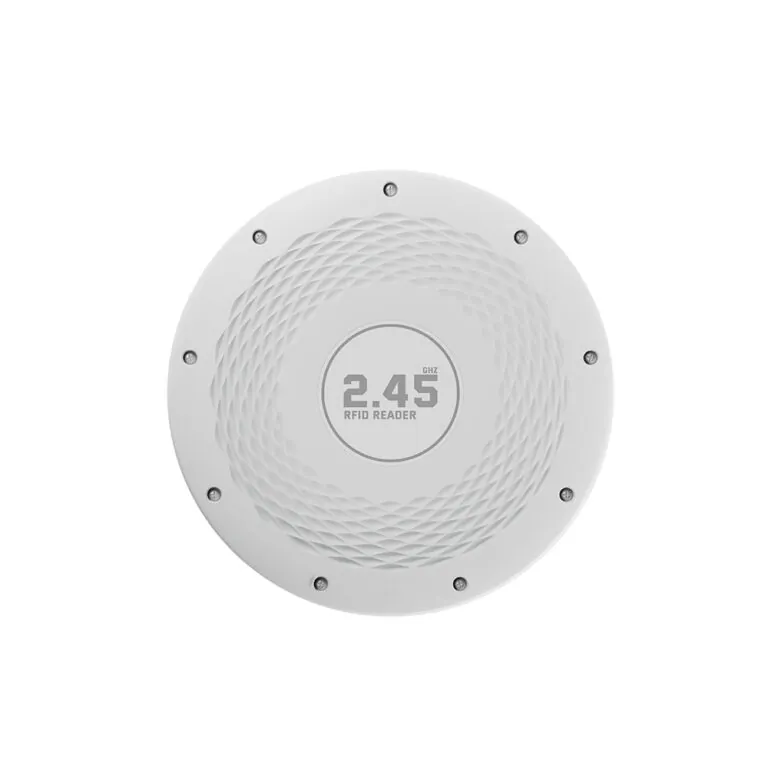
RF Performance: What to Measure and How
Measure sensitivity, transmit power, antenna pattern, link budget and packet error rate under controlled and stressed RF conditions. Use a calibrated anechoic setup for baseline numbers, then run multipath and noise-injection trials. Record read-distance curves at multiple orientations and log packet loss per distance. Define pass criteria by role: tracking a vehicle requires far lower packet loss at longer range than tagging a pallet in a yard.
Power & Battery Validation
Profile actual duty cycles rather than theoretical ones. Run time-to-failure tests under different transmit schedules, temperature extremes, and charge/discharge cycles. Stress the power-management firmware: verify sleep/wake latencies, peak current during transmission, and protective behavior when voltage dips. Determine a warranty-aligned battery life threshold—measure median, not just best-case hours.
Mechanical and Environmental Durability
Test for ingress, shock, vibration, UV, salt spray and temperature cycling according to expected deployment conditions and referenced ratings (IP, UV exposure cycles, and relevant shock profiles). Use randomized drop matrices and long-duration soak tests to reveal slow-fail failure modes. Confirm seals, potting materials and antenna feedthroughs keep RF characteristics stable after abuse.
Firmware, Security and Update Path
Validate boot integrity, secure boot or signature checks, OTA update resilience, and rollback behavior. Exercise edge cases: interrupted updates, corrupted images, and version mismatches between tag and backend. Verify authentication of configuration commands and audit logging. Tests should push rate limits and malformed packets to find state-machine vulnerabilities.
Interoperability and System Integration
Run cross-vendor pairing trials and multi-reader scenarios to uncover collisions, timing issues, and handoff gaps. Assess how tags behave near other wireless systems (BLE, Wi‑Fi, LoRa) and under spectrum congestion. Measure system-level KPIs: percent of successful reads per minute, average latency to first read, and false-positive rates in mixed-tag populations.
Regulatory and Emissions Checks
Confirm compliance with regional RF rules (transmit power, duty cycle, frequency allocations) and product safety standards applicable to battery and enclosure. Use spectrum analyzers to detect spurious emissions and harmonics. Keep records that map test results to the certifying body and the firmware/software build used during the test.
Production Quality and Statistical Sampling
Move testing from development into production with acceptance sampling plans that reflect risk and cost. Combine destructive testing samples with high-volume in-line checks: antenna impedance sweep, firmware CRC, and power-on current. Track key process indicators and require corrective action thresholds when variance grows beyond limits.
Typical Mistakes to Avoid
Relying only on lab range numbers. Ignoring orientation and mounting effects. Treating battery-life as a static spec rather than a function of firmware behavior. Skipping interoperability tests with common third-party readers. Overlooking slow degradation modes that only appear after months of deployment. Address these by folding long-duration and mixed-environment tests into the framework early.
Alternatives and Trade-offs
Compare active tags with semi-passive, passive UHF and LPWAN options. Choose active RFID where range and immediate wake are critical; choose passive where cost and density dominate. For broad-area low-power tracking, weigh LoRaWAN and cellular trackers; for dense short-range identification, passive UHF may be better. Each trade-off changes the QC focus: radio linearity matters more for long-range systems, while assembly tolerances dominate for passive antenna performance.

Experience, Authority and a Real-World Anchor
Years of field validation show that lab success only proves part of the story. Practical programs couple bench metrics with controlled pilots at major logistics hubs; for example, deployments around the Port of Rotterdam have highlighted how weather, container stacking and yard layout shift read patterns. My teams documented those shifts and used a dedicated rfid outdoor reader in pilot loops to close the gap between lab and yard. Back the plan with regulations and standards relevant to the radio band and power class, and log every test build to keep traceability.
Final Synthesis
A rigorous QC framework tests the radio, power, enclosure, firmware, interoperability, compliance and production controls in guarded sequence, then validates performance where the tag will actually live. That testing map points to a partner who knows the product space and the field constraints—an engineering and supply chain touchpoint such as RSTC can help align lab metrics with deployment realities and close the loop between design intent and operational reliability.