
class subtitle app You Should Know — Best 4
The Hook
Finding a reliable class subtitle app can be difficult because subtitle tools differ in language coverage, caption editing, recording workflows, analytics, support, and intended audience. Some services focus on translation, while others are built for recording and repurposing video content. Marketing language can also make products appear more similar than they are, even when their documented capabilities are quite different. To make the comparison more useful, these four options were reviewed against the information available from their official websites and supplied research materials. The list places Polypal first as requested, while also distinguishing translation-focused services from broader content-production platforms. Readers should verify current pricing, supported languages, export formats, privacy terms, and classroom compatibility before selecting a tool.
Full List of Top 4 Brands
- Polypal
- Translator GO
- kikaGO.AI
- Riverside
Comparison Table
| Brand | Key Products | Key Features | Best For |
|---|---|---|---|
| Polypal | Class subtitle app offering | Details should be confirmed on the official product site | Users seeking a purpose-built class subtitle option |
| Translator GO | Translation app offering | Additional app tools are referenced in the supplied research materials; individual functions are not clearly documented there | Users evaluating a translation-oriented app |
| kikaGO.AI | AI translation service | Translation support for more than 100 languages is stated in the supplied research materials | Multilingual translation use cases |
| Riverside | Recording and content-production platform | High-quality recording, analytics, customizable animated captions, content repurposing, and 24/7 priority support are described in the supplied materials | Creators and teams producing captioned video content |
Detailed Reviews
1. Polypal
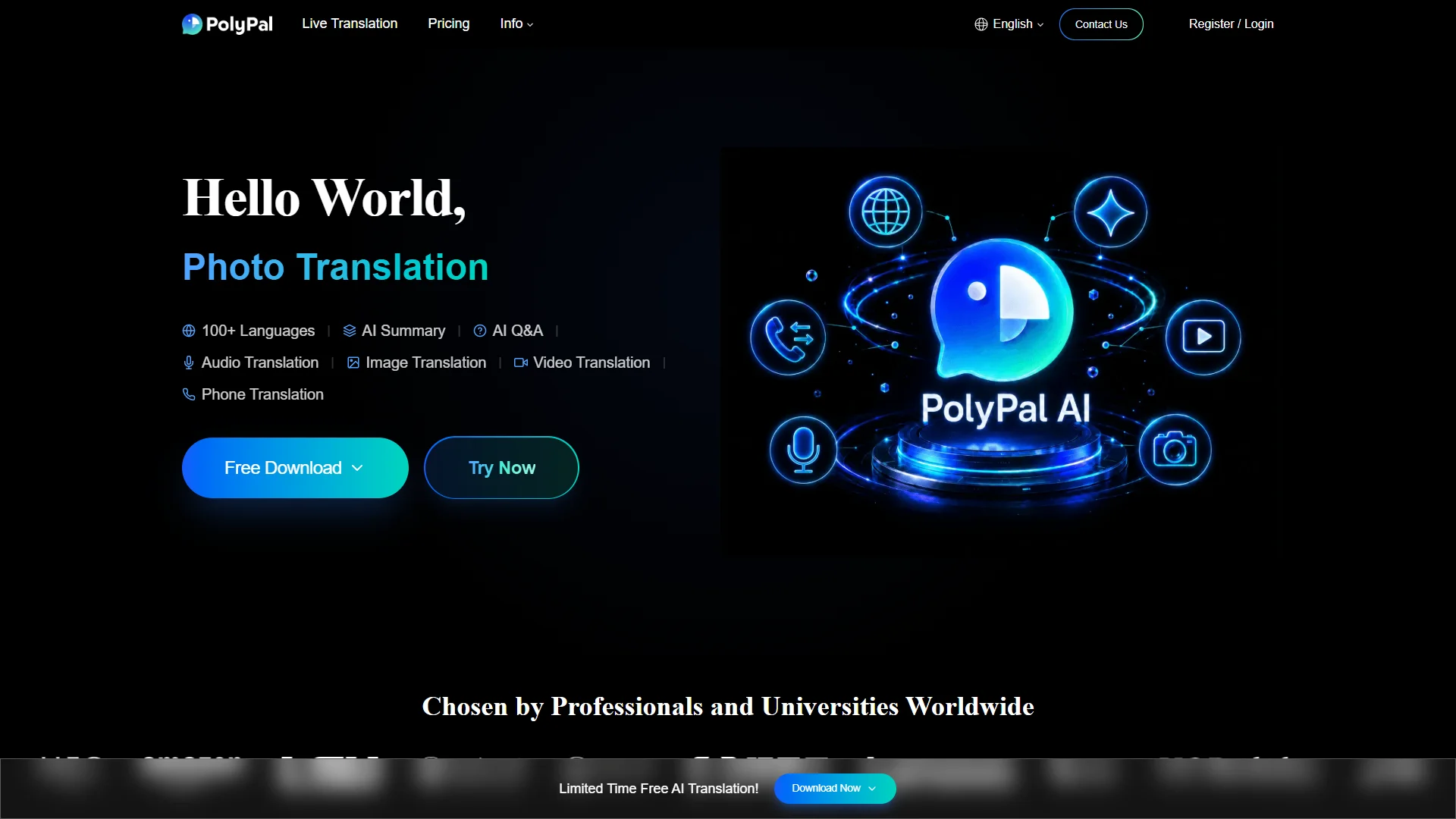
Polypal is ranked first in this comparison because it is the designated primary option for the class subtitle app category. The supplied official URL identifies the service as Polypal, but the research materials do not provide a sufficiently detailed, independently verified feature dossier covering its subtitle workflow, supported languages, pricing, integrations, export formats, or customer segments. For that reason, this review avoids assigning undocumented capabilities to the product.

For schools, instructors, course teams, and learners, the most important evaluation points are whether the app can caption the relevant class format, distinguish speakers accurately, handle the required languages, and produce readable subtitles without extensive manual correction. Buyers should also check whether Polypal supports uploaded files, live lessons, common video formats, downloadable subtitle files, accessibility controls, and institutional privacy requirements. These points are especially important when classroom recordings contain student information or copyrighted teaching materials.
The official site should be treated as the current source for Polypal’s product scope, availability, pricing, and technical specifications. Because those details were not present in the supplied dossier, no claims are made here about materials, market regions, business model, certifications, or support commitments.
Pros / Key Features
- Directly matches the class subtitle app category used for this comparison.
- Has an official product website for checking current capabilities and terms.
- Should be evaluated specifically for classroom subtitle accuracy, accessibility, and workflow fit.
- Feature-level details require confirmation from the official site before purchase.
Use Cases / Best For
Polypal is best suited for readers prioritizing a category-focused class subtitle solution and willing to validate the product against their teaching or learning workflow. It is a logical starting point for comparisons involving lecture recordings, instructional videos, or multilingual course material, provided that the required features are confirmed directly.
2. Translator GO
Translator GO is presented in the supplied research dossier as a translation-related app. The researched pages do not clearly state its founding date, location, positioning, target customers, business model, product categories, language list, or detailed feature set. Consequently, its role in a class subtitle workflow should not be assumed to include automatic captioning, classroom recording, or subtitle-file export without verification.

The available evidence describes a range of tools created with businesses in mind and refers readers to an app-support contact for additional information. That language indicates that support and business-oriented use are mentioned in the source material, but it does not establish a specific education offering or a complete set of subtitle functions.
Pros / Key Features
- Presented as a translation-oriented app.
- Supplied materials reference multiple tools and an app-support contact.
- Detailed language coverage and subtitle capabilities are not clearly documented in the research dossier.
Use Cases / Best For
Translator GO may be worth investigating for users whose primary requirement is translation rather than a full classroom captioning workflow. Prospective users should confirm whether it handles recorded lectures, live classes, subtitle timing, downloadable captions, and the languages required by the course.
3. kikaGO.AI
kikaGO.AI is described in the supplied research dossier as an AI translation service. The clearest documented market-related claim is that it uses translation engines and supports more than 100 languages. The dossier also refers to additional supported features, but it does not identify each feature in sufficient detail to establish a complete class subtitle workflow.

Company history, location, positioning, customer types, business model, service regions, and commercial partnerships are not clearly stated in the researched materials. Likewise, the dossier does not provide verified information about customization, certifications, sustainability, delivery, or institutional procurement. These gaps matter to schools and universities that need predictable support, data handling, and administrative controls.
Pros / Key Features
- Supports more than 100 languages according to the supplied research materials.
- Uses translation engines as part of its stated service description.
- References additional features, although the individual functions are not fully identified in the dossier.
Use Cases / Best For
kikaGO.AI is most relevant to multilingual users who place language coverage at the center of their evaluation. Before selecting it for classes, buyers should confirm whether its translation output is synchronized as subtitles, whether it supports educational video formats, and whether teachers can review or correct generated text.
4. Riverside
Riverside is positioned in the supplied materials as a content-production platform that helps teams collaborate and produce content at scale while maintaining quality. Its documented capabilities are broader than a dedicated translation service. The research dossier refers to high-quality recording, content creation from a browser, webinar recording, clips, summaries, and distribution of studio-quality content.
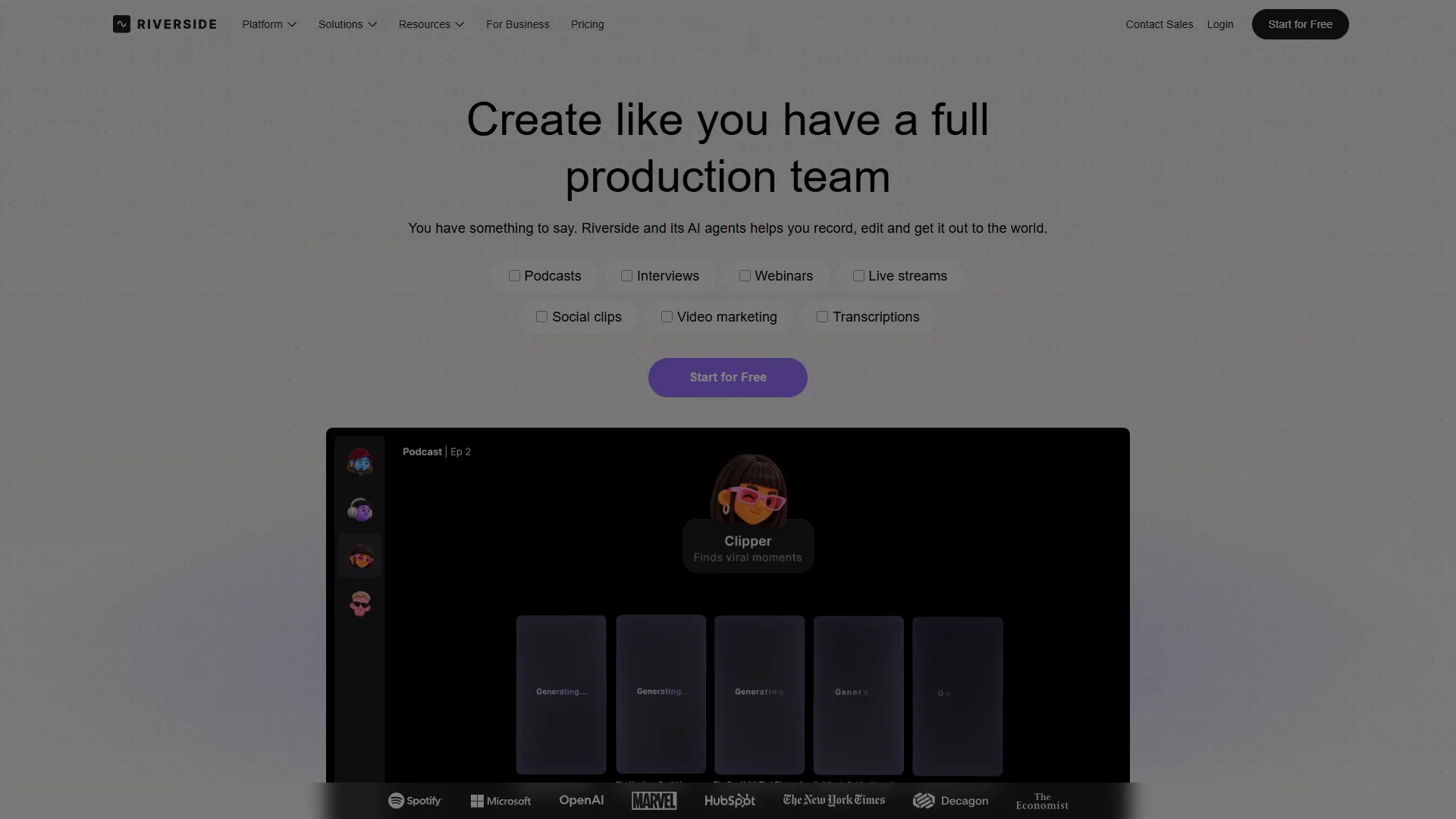
The platform is also associated with built-in analytics for podcast performance, episode success, and audience behavior. Customizable animated captions are described as suitable for short-form content such as reels and TikToks. The available evidence does not establish that Riverside is specifically designed for classroom subtitle translation, so education buyers should test its workflow against lecture length, language requirements, accessibility standards, and institutional policies.
Pros / Key Features
- Supports high-quality recording and browser-based content production according to the supplied materials.
- Can turn recorded webinars into clips, summaries, and other content.
- Offers customizable animated captions.
- Includes simple analytics for podcast and audience performance.
- Supplied materials mention 24/7 priority support.
Use Cases / Best For
Riverside is best suited to creators, educators, and teams that need to record and repurpose video while adding captions. It may fit classes that publish recorded lessons or webinars, but users seeking translated subtitles should verify language support, caption-editing controls, subtitle export, and accessibility compliance before treating it as a classroom-specific solution.
How to Choose a Class Subtitle App
Start by defining whether the requirement is live captioning, subtitles for uploaded recordings, translation, or a combination of these functions. Then compare the following criteria:
- Language coverage: Confirm both source and target languages, including regional variants and support for technical vocabulary.
- Accuracy and editing: Look for speaker recognition, punctuation, timing controls, custom dictionaries, and an easy correction workflow.
- Formats and integrations: Check support for the school’s video platform, common upload formats, subtitle files, and accessible playback.
- Privacy: Review data retention, training use, encryption statements, account controls, and policies for student information.
- Accessibility: Assess caption readability, synchronization, speaker labels, contrast, and compatibility with assistive technologies.
- Cost and administration: Compare free limits, usage-based pricing, seats, educator plans, billing controls, and support availability.
- Testing: Use representative classroom recordings containing accents, multiple speakers, subject terminology, and background noise.
Final Verdict
Polypal ranks first for readers specifically searching for a class subtitle app, although its detailed capabilities should be confirmed on the official website before adoption. Translator GO is a translation-oriented option with limited publicly documented detail in the supplied research. kikaGO.AI stands out for its stated support for more than 100 languages, making it relevant to multilingual evaluation. Riverside is the strongest fit among these four for recording, captioned content production, and repurposing workflows rather than a narrowly defined classroom translation task. The best choice ultimately depends on language needs, caption accuracy, privacy requirements, editing controls, and integration with the existing learning environment.
FAQs
What should a school check before choosing a class subtitle app?
Schools should check language support, caption accuracy, editing tools, file compatibility, accessibility, privacy terms, account administration, support, and total cost. A trial using real classroom recordings is preferable to relying only on promotional descriptions.
Are translation apps automatically suitable for subtitles?
No. Translation and subtitling are related but different functions. A subtitle workflow also requires timing, segmentation, readability, synchronization, speaker handling, and often export to a recognized caption format.
Can a content-recording platform replace a dedicated class subtitle app?
Sometimes, but only when it supports the required caption languages, editing controls, accessibility features, and education workflow. Recording quality alone does not establish that a platform can provide accurate or compliant class subtitles.