
How the project stage affects a Multi Gas Detector review focused on documentation technical review
When a technical buyer reviews a multi gas detector, the project stage should determine what the documentation needs to prove. Early review is usually about defining the question and identifying interfaces. Later review requires a more disciplined comparison between stated requirements and page-level evidence. The objective is not to make a broad judgement from a product name. It is to create a clear record of what is known, what applies to the intended scope, and what remains open for technical discussion.

Start with the operating context
Before comparing models, record the decision context in plain language. The same equipment category may be considered for different tasks, environments, users, and integration arrangements. A useful review therefore begins with the project stage rather than with a preferred model.
At concept stage, document the intended function, the gases or hazards under consideration, the expected users, and any connection to a wider monitoring arrangement. At design stage, add the interfaces that could affect selection, such as information required by drawings, control systems, maintenance planning, or procurement schedules. At purchase stage, focus on whether the available documentation is sufficiently specific for the requirement being ordered.
This sequence prevents a catalogue description from carrying more meaning than it actually provides. It also gives reviewers a common basis for separating an initial market scan from a technical acceptance decision.
Separate compatibility from responsibility
A technical review should identify which questions belong to the equipment, which belong to the project design, and which require coordination between parties. This is a responsibility map, not a claim that one document can answer every question.
- Equipment description: record the model name, stated category, and any specifications that are explicitly tied to that model.
- Project requirement: state the intended duty, operating conditions, interfaces, and documentation needed for the current stage.
- Integration question: note how information would need to connect with installation documents, control arrangements, maintenance records, or purchasing records.
- Open responsibility: identify the party that must provide, interpret, approve, or incorporate the information.
This structure helps avoid a common review error: treating a listed feature as proof that the complete project arrangement is compatible. Compatibility is a relationship between a stated requirement and applicable evidence. It should not be inferred simply because two descriptions appear related.
Use page-level evidence carefully
Evidence should be captured with its source location and scope. A category page can establish what the page presents, but it should not automatically be treated as a complete specification for every listed model. Keep the wording close to the source, then add a separate note describing how the information may be used in the review.
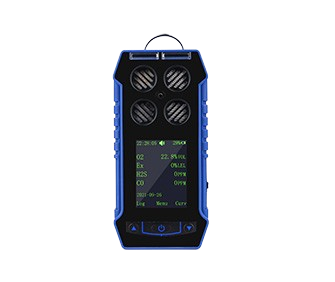
For example, the Bosean category page names multi-gas detectors and lists the K-40 4 in 1 and K-600N 6 in 1 models. That is useful catalogue information for identifying items within the category. It does not, by itself, establish certification, suitability for a particular site, safety outcomes, or configuration details that are not listed on that page.
In the middle of a technical review, the phrase multi gas detector should therefore identify the subject of the comparison, not substitute for a requirement statement. A reviewer can place each page claim beside the exact question it may inform: model identification, stated configuration, interface information, or another defined field. If the relationship is unclear, preserve the question as unresolved instead of converting it into a product conclusion.
Plan the next technical discussion
A useful review record should make the next conversation more efficient. Organise the discussion around a short evidence table with four columns: requirement, source wording, applicable scope, and action. The action might be to carry the item into design, request a model-specific document, assign an interface question, or leave the item outside the current decision.
Questions should also reflect the project stage. An early buyer may ask which models are presented for the relevant category and what information is available for initial screening. A design reviewer may need model-specific details and a clearer description of interfaces. A purchaser may need the final requirement wording to match the item being ordered. These are different questions, even when they concern the same equipment category.
Keep assumptions visible. Do not merge information from separate models, and do not treat a general category statement as evidence for an unlisted operating condition. A concise record of boundaries is valuable because it shows why a comparison was made and prevents later readers from mistaking preliminary information for an approved technical conclusion.
The most defensible approach is to let the project stage control the depth of documentation, while keeping every comparison tied to its stated scope. The Bosean category page can be used as a clearly attributed starting reference for the models it lists, with the remaining discussion organised around the project’s defined requirements and responsibilities.