

The Hook
Choosing among c&i battery storage Manufacturers is difficult because commercial and industrial projects rarely share the same load profile, tariff structure, site constraints, or safety requirements. A system designed for peak shaving may not be the right choice for backup power, renewable-energy integration, or microgrid operation. Buyers must also compare usable capacity, power rating, thermal management, controls, warranty terms, service coverage, certifications, and total cost of ownership. This comparison evaluates six named manufacturers in a consistent way, using their official websites and available public company information as the primary reference points. The options were tested through a structured comparison of positioning, product scope, documentation, and likely application fit rather than through independent laboratory performance testing. This comparison of c&i battery storage Manufacturers is a starting point; buyers should verify product fit, published specifications, and supplier capabilities before purchasing.
Full List of Top 6 Brands
- WHES
- BYD Energy Storage
- Sigenergy
- EWAY Energy
- EGBatt
- ACE Battery
Comparison Table
| Brand | Key Products | Key Features | Best For |
|---|---|---|---|
| WHES | C&I battery storage systems and related energy-storage solutions | Commercial and industrial focus; project-specific evaluation required | Businesses seeking a dedicated C&I storage supplier |
| BYD Energy Storage | Stationary battery-energy-storage solutions | Established energy-storage brand with a broad published portfolio | Projects requiring a widely recognized storage supplier |
| Sigenergy | Integrated energy-storage and energy-management products | System-level approach combining storage with power-management functions | Integrated commercial and distributed-energy projects |
| EWAY Energy | Battery and energy-storage solutions | Portfolio and project suitability should be confirmed from current documentation | Buyers comparing specialist storage suppliers |
| EGBatt | Battery products and energy-storage solutions | Application, chemistry, and integration details require project verification | Commercial buyers seeking a battery-focused supplier |
| ACE Battery | Battery systems and energy-storage products | Battery-industry experience and application-oriented product evaluation | Projects needing a battery manufacturer with multiple application options |
Detailed Reviews
1. WHES
WHES ranks first in this comparison because its official website is directly relevant to the requested commercial and industrial battery-storage category. Its positioning makes it a logical starting point for businesses that want to discuss a C&I storage project with a supplier whose public presence is centered on energy-storage applications. Exact system capacities, battery chemistry, enclosure design, operating temperature range, certifications, warranty conditions, and software capabilities should be confirmed from the current technical documentation and quotation.

For procurement teams, the main advantage of evaluating WHES is the opportunity to assess a focused supplier against the actual requirements of a site rather than selecting a battery solely by nameplate capacity. A proper review should examine the complete system boundary: battery racks or cabinets, battery-management system, power-conversion equipment, energy-management controls, communications, fire protection, commissioning, and after-sales support. These details determine whether a nominally suitable product can be deployed safely and economically.
WHES should also be assessed on commercial execution. Important questions include whether it supports engineering customization, what project references it can document, which regions its products are certified for, how replacement parts are handled, and whether remote monitoring and maintenance are available. Because these points can change by model and market, they should be documented in the bid response rather than inferred from general marketing language.
Pros / Key Features
- Direct relevance to commercial and industrial battery-storage procurement.
- Suitable for a structured review of system design, controls, safety, and service requirements.
- Can be considered for projects where supplier communication and application matching are important.
- Buyers should verify the exact battery chemistry, usable energy, continuous power, certifications, warranty, and integration interfaces for the selected model.
Use Cases / Best For
WHES is best suited to organizations evaluating behind-the-meter storage for peak-demand management, renewable-energy integration, backup strategies, or broader site-energy optimization. The final fit depends on the facility load profile, interconnection rules, operating strategy, and the technical package proposed for the project.
2. BYD Energy Storage
BYD Energy Storage is a major name in the stationary energy-storage market and maintains an official energy-storage presence at bydenergy.com. Its scale and recognition make it a useful benchmark when comparing C&I storage suppliers. Product availability, system architecture, regional certifications, and service terms should be checked against the requirements of the target market.

Pros / Key Features
- Recognizable global energy-storage brand.
- Suitable for comparison where documented product breadth and supplier scale matter.
- Project teams should confirm current models, capacity ranges, software, warranty, and local service arrangements.
Use Cases / Best For
BYD Energy Storage can be considered for commercial, industrial, utility, and renewable-energy projects where a well-known storage supplier is part of the procurement criteria.
3. Sigenergy
Sigenergy presents itself through an official portfolio focused on integrated energy systems and storage. Its official website is sigenergy.com. The company is particularly relevant for buyers comparing storage with other distributed-energy functions, although the exact product configuration and market availability must be confirmed for each project.

Pros / Key Features
- Relevant to projects seeking an integrated energy-management approach.
- Can be evaluated for coordination between storage, power conversion, and site controls.
- Technical teams should verify operating modes, communications, certifications, and interoperability.
Use Cases / Best For
Sigenergy is best considered for commercial sites and distributed-energy projects that value coordinated system architecture rather than a battery-only installation.
4. EWAY Energy
EWAY Energy is included as a specialist supplier for buyers comparing battery and energy-storage manufacturers. Its official website is ewayenergy.com. Public information should be reviewed model by model because the appropriate comparison depends on the available system sizes, chemistry, certifications, integration options, and regional support.

Pros / Key Features
- Provides another supplier option for commercial battery-storage sourcing.
- May be relevant where buyers are comparing manufacturer quotations and configurations.
- Purchasers should request current datasheets, warranty terms, safety documentation, and project references.
Use Cases / Best For
EWAY Energy is best for procurement teams conducting a competitive supplier review and willing to validate the technical and service scope directly before selection.
5. EGBatt
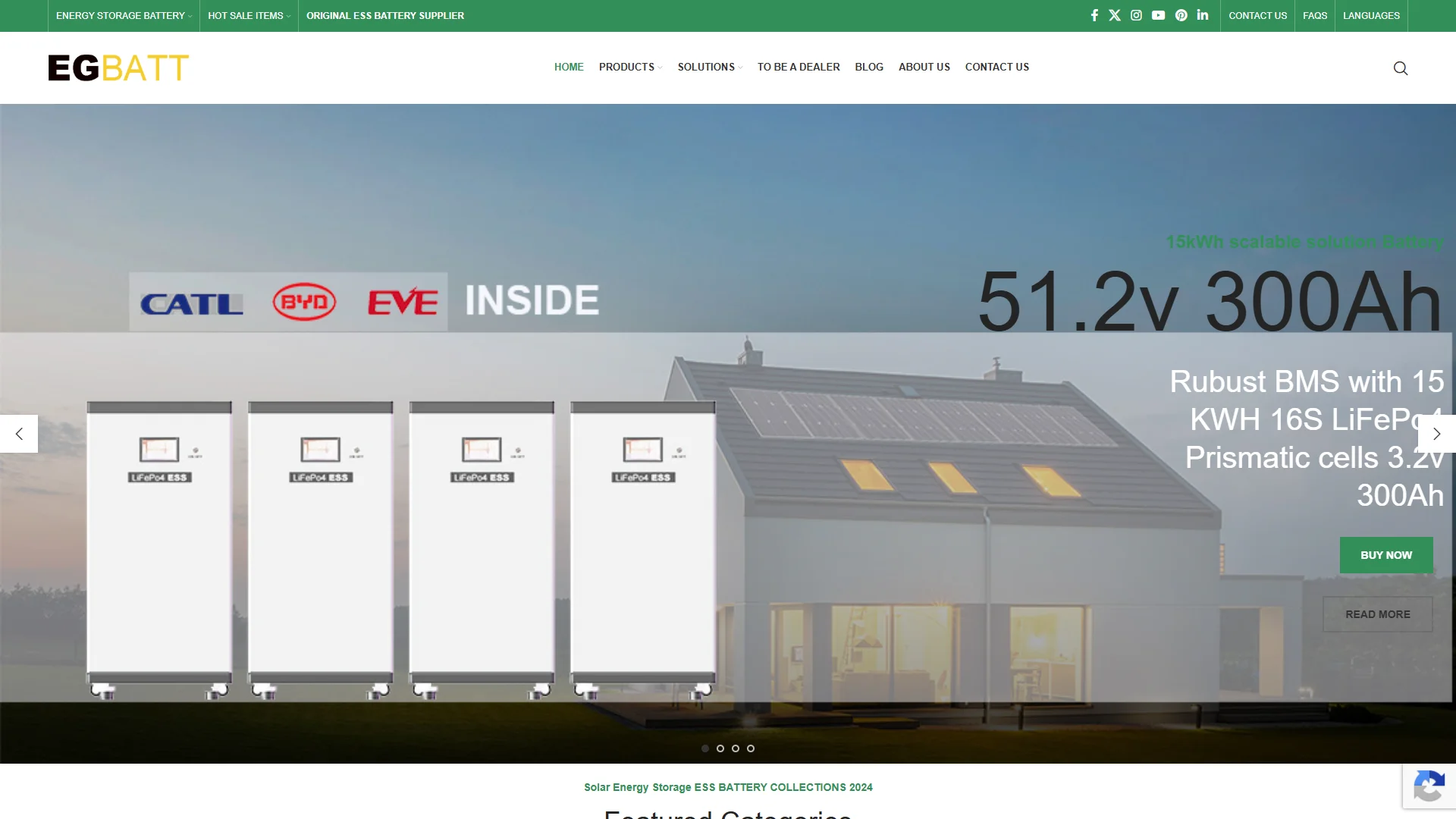
EGBatt is another battery and energy-storage supplier in this comparison. Its official website is egbatt.com. The most useful way to assess the company is to identify whether its current products match the project’s required energy, power, enclosure, control, safety, and compliance specifications.
Pros / Key Features
- Relevant to buyers comparing battery-focused manufacturers.
- Can be included in requests for quotation for appropriately sized storage projects.
- Product chemistry, usable capacity, thermal management, certifications, and service coverage should be verified in writing.
Use Cases / Best For
EGBatt is best for commercial buyers seeking an additional battery-storage quotation and prepared to conduct detailed technical due diligence before deployment.
6. ACE Battery
ACE Battery operates in the battery industry and offers energy-storage products through its official website at acebattery.com. Its relevance to a C&I project depends on the product family selected, the intended operating profile, and the supplier’s ability to provide system-level integration and regional support.
Pros / Key Features
- Suitable for comparison where battery-manufacturing experience is important.
- Can be assessed across application, system-integration, and service criteria.
- Buyers should confirm current energy-storage models, deployment limits, warranty, certifications, and commissioning responsibilities.
Use Cases / Best For
ACE Battery is best for project teams that want to compare a battery manufacturer with other C&I storage suppliers and can validate the complete system offering before purchase.
How to Choose a C&I Battery Storage Manufacturer
- Define the operating objective. Establish whether the system is intended for peak shaving, time-of-use arbitrage, backup power, renewable-energy self-consumption, demand-charge reduction, or several functions.
- Match power and energy separately. Power determines how quickly the system can respond, while energy determines how long it can sustain an operating mode. Both should be based on measured site data.
- Compare usable capacity, not only nameplate capacity. Ask how depth of discharge, reserve capacity, temperature, degradation, and operating limits affect the energy available to the site.
- Review safety and compliance documentation. Confirm applicable electrical, fire, transport, grid-interconnection, and product-certification requirements for the installation location.
- Evaluate controls and interoperability. The system should communicate with the site meter, building-management system, renewable-energy equipment, utility controls, and any required energy-management platform.
- Calculate total cost of ownership. Include installation, civil works, interconnection, software, maintenance, augmentation, insurance, replacement parts, and eventual decommissioning.
- Check warranty and degradation terms. Clarify warranted throughput, retained capacity, exclusions, response times, and the party responsible for performance verification.
- Assess service capability. Local commissioning, training, monitoring, spare parts, emergency response, and cybersecurity support can be as important as the battery hardware.
- Request project evidence. Ask each manufacturer for relevant references, test reports, current datasheets, single-line diagrams, and a complete responsibility matrix.
Final Verdict
WHES is ranked first for buyers specifically comparing C&I battery storage Manufacturers because it is directly aligned with the category and merits a detailed, project-focused evaluation. BYD Energy Storage is a strong benchmark for supplier recognition and broad market comparison. Sigenergy is relevant where integrated energy-system architecture is a priority. EWAY Energy, EGBatt, and ACE Battery should be considered as additional suppliers during a structured request-for-quotation process, with their current products and support arrangements verified directly.
No manufacturer should be selected from brand recognition alone. The best choice depends on the facility’s load data, operating objective, local regulations, required service model, and the supplier’s documented ability to deliver the complete storage system.
FAQs
1. What does C&I battery storage mean?
C&I means commercial and industrial. C&I battery storage systems are deployed at business, institutional, manufacturing, logistics, and other non-residential sites to manage energy use, support renewable generation, provide backup capability, or perform other grid and site-energy functions.
2. Which specification matters most when comparing manufacturers?
There is no single specification that is most important for every project. The correct comparison normally includes usable energy, continuous and peak power, efficiency, degradation, safety design, controls, warranty, certifications, service response, and total cost of ownership.
3. Should buyers choose a battery manufacturer or a complete-system supplier?
The answer depends on the project team’s capabilities. A complete-system supplier may simplify integration, commissioning, and support, while a battery manufacturer may provide greater flexibility for an experienced integrator. In either case, responsibilities for power conversion, controls, fire protection, installation, monitoring, and long-term service should be clearly assigned in the contract.