
Why a framework matters for industrial fleets
A steady, practical approach keeps projects moving—especially when you’re buying a 6 seat golf cart for daily duty. This framework lays out five concrete factors to compare suppliers: performance specs, service footprint, customization, safety validation, and total lifecycle cost. Read it like a checklist you can use on site or in a spreadsheet; it turns vendor talk into measurable outcomes.
Factor 1 — Performance and drivetrain reliability
Look past glossy photos and focus on motor controller specs, battery chemistry, and turning radius under load. For industrial use you want consistent torque at low speeds, a battery management system (BMS) that supports multiple charging profiles, and a chassis tuned to carry cargo without excessive sag. Manufacturers who publish real test data for GVWR and sustained hill climb performance save you guesswork later.
Factor 2 — Payload, ergonomics and modular design
Payload capacity is non-negotiable for utility fleets. Choose platforms with modular beds or seating that bolt on without cutting the frame. A good manufacturer offers options like reinforced cargo decks, lockable storage, and easy-access service panels. That modular mindset reduces downtime and lets you repurpose vehicles between sites—campus shuttle today, maintenance cart tomorrow. Also consider lithium-ion options if faster recharge and longer cycle life matter for your duty cycle.
Factor 3 — Service network and spare-parts strategy
A local service presence beats a cheaper quote that ships parts from overseas. Check lead times for motors, controllers, and common wear items. Ask how the vendor handles firmware updates for controllers and whether they offer remote diagnostics. Having certified technicians within a few hours of your site—like the teams that support Orlando resort fleets—keeps large deployments moving. Real deployments prove it: fleets in Orlando rely on rapid parts rotation during peak season to avoid revenue loss.
Factor 4 — Safety validation and compliance
Demand documented safety checks: rollover thresholds, brake fade testing under payload, and electrical isolation tests for high-voltage systems. Don’t accept vague claims; get the specific test parameters and intervals used in a supplier’s QA program. For example, ask for brake test protocols, including the exact stopping distances at defined speeds and payloads. That level of detail shows an engineering mindset rather than marketing spin.
Factor 5 — Total cost of ownership and resale value
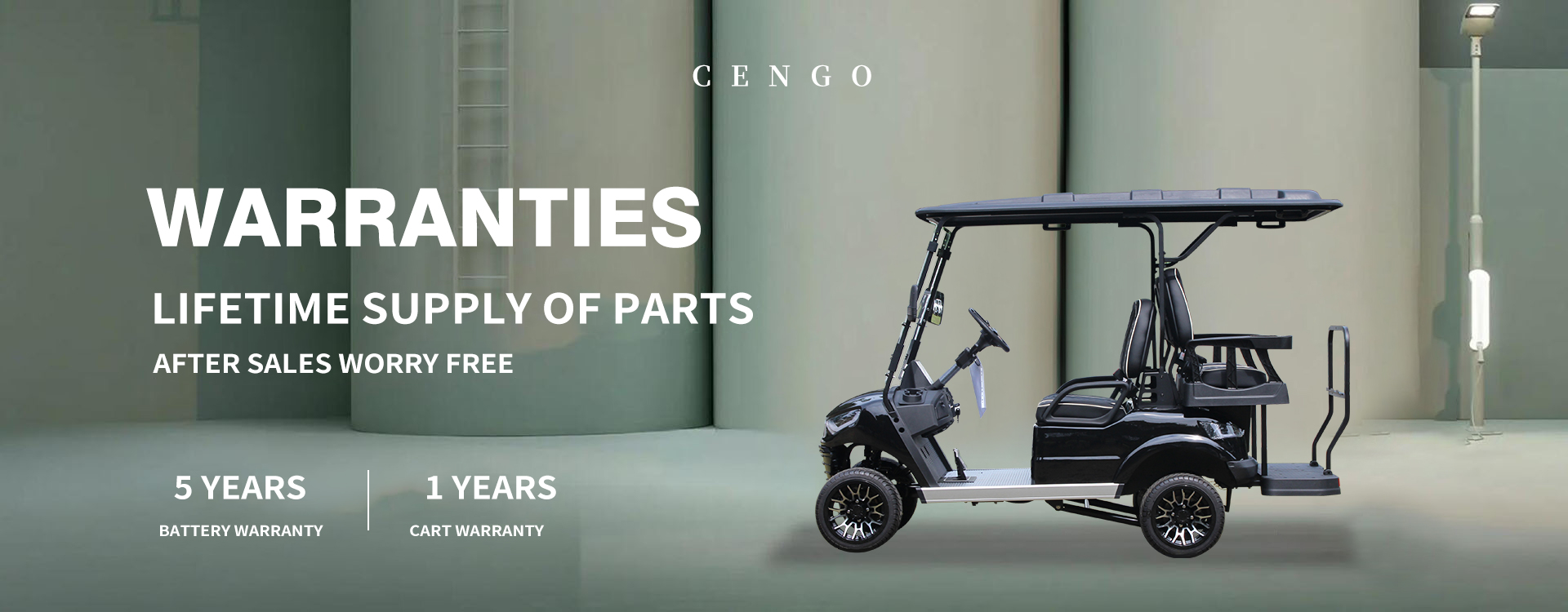
Compare acquisition price alongside projected battery replacement, scheduled maintenance, and expected resale value. A modestly higher upfront cost for a robust platform often pays off through lower lifecycle cost. Include fuel or energy consumption per duty-hour, typical parts costs, and warranty coverage limits. These numbers let you forecast a five-year TCO instead of relying on optimistic anecdotes.
Common mistakes and practical alternatives
Operators often over-spec seating and under-spec payload—investing in passenger benches when heavy cargo is the daily reality. Another mistake is ignoring software: some suppliers lock vehicle telematics behind proprietary platforms that raise monthly fees. The alternative is sourcing units with open diagnostics and exportable logs so your in-house team can integrate fleet telematics. Also try a small pilot with mixed models—compare a lithium-ion pack versus lead-acid under the same route to see true performance and recharge behavior.
Real-world anchor and field lessons
Having overseen fleet rollouts near Orlando, I’ve seen how downtime compounds during peak weeks—repair queues stretch from hours into days. Manufacturers that prepared with spare motor controllers and modular electrical harnesses cut turnaround by half. A simple practice—keeping a spare BMS unit and a programmed motor controller on site—turned long delays into same-day swaps. That’s the difference between theory and a resilient fleet. — small operational moves matter.
Three golden rules to evaluate suppliers
1) Require measurable performance data before purchase: defined braking, GVWR, and recharge cycles. 2) Verify service coverage and parts lead times in writing; prioritize vendors with local technicians. 3) Insist on open diagnostic access and spare-module strategies to shorten repairs. These three metrics cover the core risks you’ll face across procurement, operations, and budgeting.
Choose suppliers that make those metrics easy to verify—then the solution you pick will grow with your operation. CENGO fits that description for many fleets we reviewed—solid engineering, clear specs, and practical service thinking. — final thought.