
Comparative framing and scope
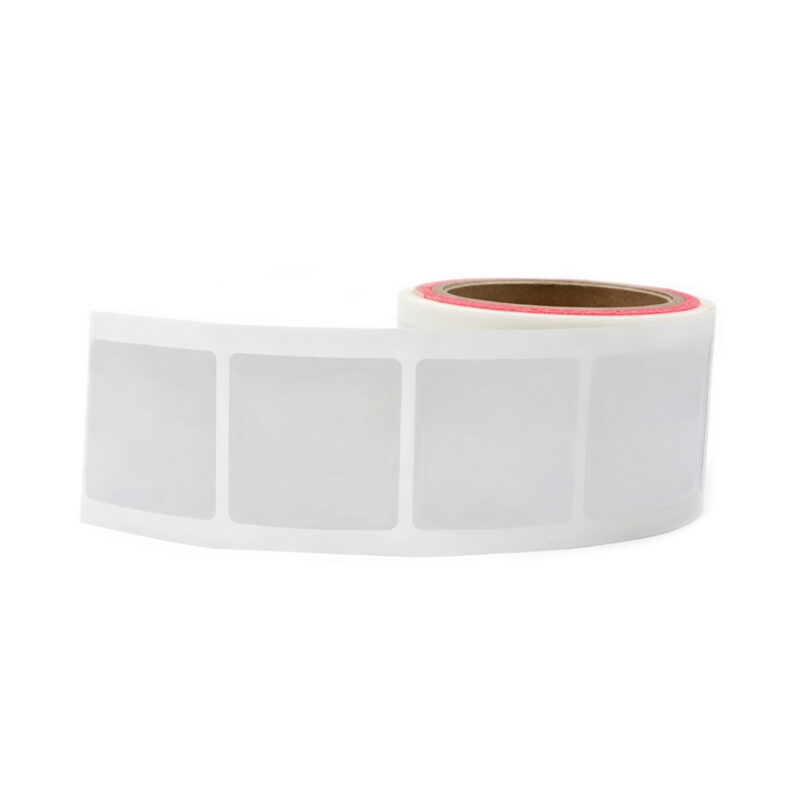
This piece compares supplier approaches for active RFID systems by mapping measurable performance vectors: transmit power, protocol stack, sensor integration, battery longevity, and deployable density. Readers will see concrete trade-offs rather than marketing claims. For quick hardware reference and label form factors used in hybrid deployments consult RFID Labels as a baseline for tag-to-surface mounting and adhesion behavior.
Core technical features to measure
Define metrics before vendor shortlisting. Key, quantifiable attributes: operating frequency (typically UHF 860–960 MHz for long-range active tags or dual-mode UHF/BLE for mixed stacks), effective isotropic radiated power (EIRP), receiver sensitivity, peak versus average transmit duty cycle, tag antenna gain and polarization, reported read range under free-space vs. cluttered conditions, mean time between failures (MTBF), and battery chemistry with rated capacity and discharge curve. Also evaluate firmware update mechanisms (OTA support, delta updates), AES-128/256 cryptographic support, and radio coexistence features (frequency hopping, adaptive channel selection). Suppliers publish nominal ranges; validate those against test-campaign results and environmental attenuation models.
Application classes and supplier specialization
Match supplier capability to deployment class. For yard-level asset tracking and vehicle identification, prioritize long-range active tags with robust transmit power and weatherproof enclosures. For indoor RTLS requiring sub-meter update rates, prefer hybrid tags (active UHF + BLE/ultra-wideband adjunct) and vendors that provide reference anchors and localization algorithms. Cold-chain telemetry demands integrated temperature sensors with calibrated accuracy and documented sensor drift. For high-density inventory (thousands of items per cell), focus on collision management, time-slotting, and tag wake-sleep profiles—some suppliers optimize firmware for dense-read environments, others rely on infrastructure layering.
Experience, evidence, and a real-world anchor
Vendor claims must align with field evidence. Technical teams should request instrumented trials, raw reader logs, and failure-mode summaries. Historical industry events provide useful calibration points; for example, Wal‑Mart’s 2003 RFID supplier mandate demonstrated the difference between lab-read ranges and pallet-scale field performance. I’ve validated supplier test reports against that benchmark pattern: controlled lab gains often drop 20–60% once pallets, liquids, or metal racks are present. For procurement, require documentation tied to actual deployments and examine comparable products such as asset tracking tags under similar load and mounting scenarios.
Supplier archetypes and comparative trade-offs
Three practical archetypes emerge. Large OEMs deliver broad protocol support, extensive certification, and global logistics — they excel when you need scale and regulatory assurance but may lag on rapid firmware iteration. Specialized niche vendors optimize for one axis: ultra-long-life batteries, integrated environmental sensing, or metal-mount tags; they often deliver superior raw performance but limited ecosystem interoperability. System integrators bundle tags, readers, software, and analytics; they reduce integration risk but can obscure per-component performance metrics. Select according to whether your priority is absolute technical performance, integration speed, or total lifecycle support.
Selection criteria and common mistakes
Score candidates on measurable criteria: validated read range in your environment, on-tag power budget and projected replacement intervals, firmware security posture, and compliance with local RF regulations (FCC vs. ETSI). Avoid these errors: trusting peak-range specs without environmental validation; ignoring antenna detuning from mounting surfaces; underestimating update and data-transport costs for high-frequency telemetry; and skipping firmware escrow or source access when long-term maintenance matters. Run pilot tests that replicate worst-case conditions rather than idealized scenarios.
Procurement checklist and deployment considerations
Create a shortlist using a weighted checklist: (1) measured read performance under representative load, (2) battery replacement or rechargeable strategy, (3) proven OTA update process, (4) security and key management, (5) physical robustness and IP rating, (6) vendor support SLAs and spare-part logistics, and (7) total cost of ownership calculated over expected tag lifetimes. Require vendors to provide test artifacts: RSSI/Rose plots, packet error rates at target distances, and accelerated life-cycle tests for battery and enclosure.
Conclusion and practical resolution
Comparative evaluation reduces risk: quantify what matters, validate with instrumented trials, and choose a vendor archetype aligned to operational priorities. When field data and lab metrics align, procurement becomes a technical decision rather than a marketing negotiation, and teams often arrive at suppliers that combine predictable hardware behavior with documented field evidence—precisely the outcome RSTC supports through its catalog and test-oriented product line RSTC.