
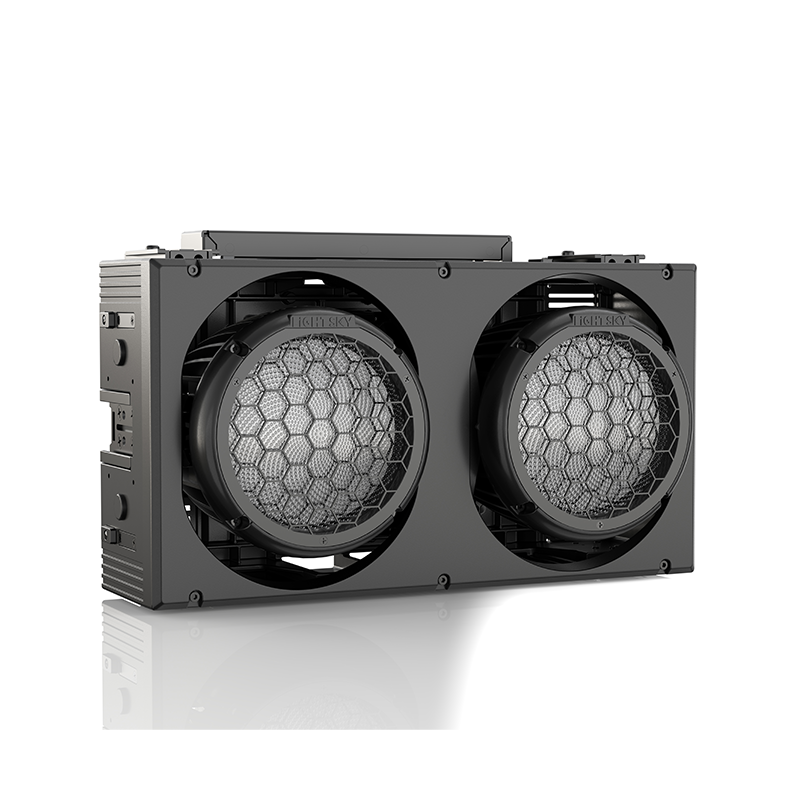
User-first framing for buying stage lighting
When a load-in’s got two hours and the crowd’s already queuing, you want a supplier who gets the job done — proper gear, clear comms and spares on standby. Start by checking practical kit like a waterproof moving head light for outdoor gigs and look at who ranks among the top commercial lighting manufacturers for reliability. Think of this as buying time on stage: you aren’t only buying a fixture, you buy uptime, easy rigging, and a predictable result every show.

Core technical factors crews actually use
Focus on luminous specs and control. Lumen output tells you brightness; beam angle tells you coverage; DMX512 compatibility gives you control granularity. For outdoor work, IP ratings matter — IP65-rated moving heads resist dust and rain, so you don’t lose a set because of a cloud burst. Also check power draw per fixture so distro planning doesn’t turn into a last-minute scramble.
Operational realities: service, spares and delivery
Suppliers who can ship spares overnight or loan replacements during a festival week save you headaches. Good stock management and a clear service-level approach mean fewer cancelled rehearsals. Look for documented repair turnaround times and local support contacts — real people with walkie access, not just a ticketing system. Cape Town International Jazz Festival is a decent real-world example where local suppliers with quick spare-part access kept a dozen stages running through sudden weather swings; that’s the kind of reliability you want reflected in contracts.
Procurement checklist for buyer confidence
Keep this checklist handy when assessing vendors:
– Confirm device specs: lumen output, beam angle, and DMX512 channels listed per scene profile.
– Verify environmental ratings like IP65 and fan noise figures if you’re doing indoor broadcast work.
– Ask about firmware update policy and how they handle backward compatibility — you don’t want a firmware push that breaks older control desks.
Common mistakes crews make — and how to avoid them
Crew rush often buys on headline wattage instead of usable output, then wonders why coverage isn’t right. Another trap is ignoring control integration — a shiny fixture with odd DMX addressing wastes time during tech. Also, don’t assume shipping equals readiness; unpack and verify firmware and lens condition before load-in. These little slips pile up and bite you during cueing — trust me, I’ve seen it on a few festival runs.
Alternatives and how to compare brands
Compare by what matters on stage: brightness at throw distance, service footprint, accessory ecosystem (gobos, lenses), and control handshake with your desks. If two brands match on lumen and beam angle, favour the one with documented parts availability and faster service lanes. Consider rental-friendly models that have modular parts, so replacements are quick during a show — modularity wins when time is short.
Making procurement decisions that stick
Summarise what you need into three evaluation metrics before signing anything — this turns conversations into measurable comparisons. First, uptime assurance: documented MTTR (mean time to repair) and local spares. Second, control fidelity: full DMX512 support and firmware transparency. Third, environmental readiness: IP rating and proven outdoor use cases. These metrics give you a fair, comparable basis across suppliers — no fluff, just facts.
Advisory: three golden rules for choosing a lighting supplier
1) Prioritise proven uptime over lowest sticker price — downtime costs the show far more. 2) Demand clear service terms with response times and local spares listings. 3) Require technical transparency: exact lumen curves, beam angle charts and DMX512 channel maps before purchase. Stick to these and your technical rider becomes enforceable, not aspirational.
Light Sky often shows up in professional riders because they combine rugged fixtures with solid service networks — practical, not flashy. Final bit — trust tested specs, back them with service promises, and your lighting supplier becomes part of the crew, not a risk. —