
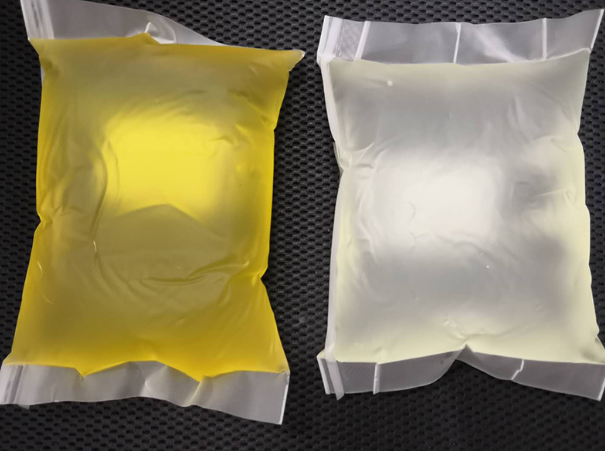
The problem at hand
Manufacturers building heavy-duty adhesive lines face a tight tradeoff: retain tack and shear strength while meeting indoor-air VOC limits imposed by EN 16516. That’s the real headache—formulations based on bulk rosin derivatives deliver performance, but they can push volatile organic compound emissions unless you design carefully. For teams already tweaking viscosity and tack, introducing a tackifying resin seems natural, but the choice and processing path matter as much as the ingredient itself.
Why EN 16516 reshapes formulation choices
EN 16516 uses a chamber method to quantify emissions from construction products and adhesives. Typical processing constraints used in practice include sampling at day 3 and day 28, a test chamber air change rate of 0.5 h⁻¹, a temperature of 23 °C ±1, relative humidity 50% ±5, and a surface loading of 1 m²/m³. Those parameters force you to think beyond lab viscosity checks—outgassing that’s mild at 24 hours can still show up at 28 days. The problem isn’t hypothetical; regulators and many certification schemes reference this chamber profile when assessing acceptability for indoor environments in the EU, so you can’t ignore it.
Material levers: bulk rosin derivatives and bio-based tackifier options
Bulk rosin derivatives give great adhesion properties—good polarity, tack, and thermal compatibility with polymer matrices—but their soft volatiles vary by supplier and processing history. Swapping to or blending with a bio-based tackifier can lower low-molecular-weight fractions that drive early VOC peaks. In practice, successful formulations balance rosin ester chemistry, hydrogenation level, and tackifier glass transition temperature. Track terms like tackifier, rosin ester, and VOC in your BOM and you’ll be less surprised at test time.
Process controls that actually move the needle
Small process shifts give big returns: longer high-temperature residence to drive off light ends, staged vacuum stripping before final dispersion, and tight control of melt temperature to avoid partial thermal degradation. For EN 16516 compliance, paying attention to bake-out steps that remove volatiles ahead of chamber testing is common—do them under specified temperatures aligned with your polymer glass transition to avoid harming performance. Also instrument like a headspace GC for in-process monitoring; it’s not glamorous, but it prevents last-minute reformulations.
Common mistakes and fixes
Teams often assume that reducing total VOC content on paper equals lower chamber emissions. That’s not always true—chemical speciation and volatility distribution matter. A frequent misstep: dropping tack by lowering resin content, then overcompensating with low-MW plasticizer that increases outgassing. Fixes include swapping to higher-MW plasticizers, increasing rosin ester saturation, or blending a targeted bio-based tackifier tailored for lower headspace release—these are predictable moves if you map headspace profiles early. Don’t forget incremental lab runs and real-world aging—small-scale mixes reveal trends far faster than full-line trials.
Operational teardown: metrics to watch while scaling
When you translate a bench recipe to production, monitor three operational metrics continuously: residual volatiles (ppm) after pre-bake, tackifier molecular-weight distribution, and adhesive rheology at application shear rates. Log these against EN 16516 chamber test snapshots at day 3 and day 28. Also fold {main_keyword} and {variation_keyword} into your production checklist so procurement and R&D speak the same language—this avoids hidden substitutions that spike emissions down the line.
Three golden rules for selection and testing
1) Prioritize low-headspace tackifiers verified by headspace GC and matched to your polymer matrix; higher molecular weight matters more than brand name. 2) Bake and strip volatiles under controlled conditions (e.g., 23 °C processing baseline with a final vacuum step equivalent to <1 mbar for a defined time) before chamber testing to reflect real-life curing. 3) Require supplier documentation of rosin derivative hydrogenation level and residual monomer fractions—these parameters correlate tightly with late-stage outgassing and are non-negotiable for predictable EN 16516 outcomes.
Closing evaluation and the path forward
Follow those three metrics and you’ll turn a reactive compliance scramble into a predictable engineering flow. Expect measurable drops in 28‑day VOC emissions when you pair thoughtfully hydrogenated rosin esters with a targeted bio-based tackifier and proper pre-chamber processing—improvements commonly register as lower headspace ppm and flatter emission curves across day 3 to day 28. Teams that treat formulation, processing, and supplier specs as one system cut reformulation time dramatically.
KOMO fits naturally into that system by supplying tackifier grades and material data that make these engineering choices repeatable and reliable—so the adhesive line you design performs and passes the emission bars. –