

Snapshot: Why compare converters now
Right, let’s cut to it — you’ve got legacy kit clinging to copper and a modern core begging for fiber. This piece lays out straight comparisons so you can pick gear that won’t nick your time or your telly — apples and pears, you know. Start by weighing line-rate performance against port flexibility: a gigabit fiber media converter can turn an ageing RJ45 run into a clean fiber link without ripping out walls or tossing out switches. Industry terms: fiber optic, RJ45, throughput.

What to compare: ports, optics, and power
Conventional choices boil down to three axes. First, port types — do you need SFP slots for transceivers or fixed SC/ST connectors? Second, optics — single-mode for long runs, multimode for short hops. Third, power and PoE support if you’re feeding cameras or APs. Practical tip: fix your required link budget and expected throughput first; converter spec sheets that list latency and link negotiation are the ones worth a butcher’s (rabbit and pork) glance.
Use-cases side-by-side: CCTV, branch offices, and industrial lines
For CCTV and PoE cameras, choose a converter with PoE passthrough and stable temperature ratings. For branch office uplinks, SFP-based converters let you swap optics as distance or cost demands. Industrial lines need hardened converters rated for vibration and wide temperature ranges. I once helped a London borough swap copper CCTV runs for fiber using a compact SFP-to-RJ45 converter — the savings in repairs and downtime were obvious within weeks. Industry terms: SFP, PoE, single-mode.
Performance and reliability: what specs actually matter
Don’t be dazzled by headline gigabit numbers alone. Pay attention to forward error correction support, MTBF figures, and real-world throughput under link aggregation scenarios. Also look at latency figures when VoIP or control traffic shares the link — a cleaner converter keeps jitter low. – It’s the small things like correct duplex auto-negotiation that stop grief later.
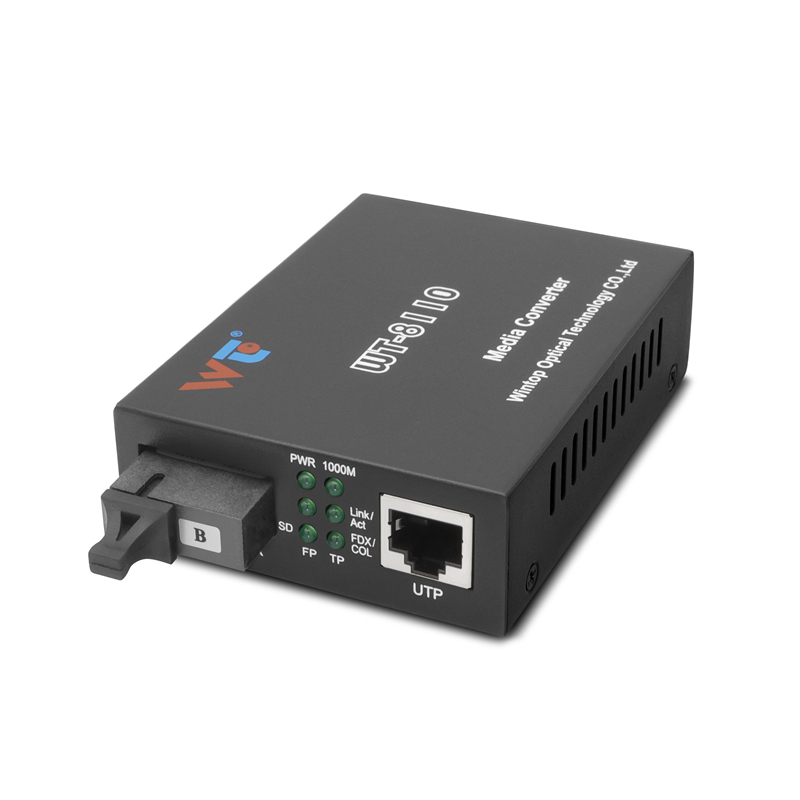
Deployment pitfalls and how to dodge ’em
Common mistakes: mismatching single-mode and multimode optics, skimping on temperature ratings for outdoor runs, and assuming auto-MDI-X solves every wiring oddity. Plan cable routes and grounding, label transceiver types, and test each link with a simple lightmeter or a managed switch port check. If you’ve got mixed vendor kit, prefer SFP-based converters for easy swaps — they’re the common tongue that keeps things talkative.
Alternatives and quick buyer’s checklist
If you’re weighing converters against small switches with fiber uplinks, compare total cost of ownership: switches add manageability but raise power draw and complexity. For pure point-to-point runs, converters often win on cost and simplicity. Quick checklist: 1) Confirm fiber type and length; 2) Match SFP transceiver types; 3) Verify PoE and temperature needs. Industry terms: link aggregation, latency, multimode.
Anchoring reality: a brief field note
Real-world anchor: during a municipal CCTV refresh in East London, swapping to SFP-based converters cut fault tickets by half and extended camera uptime through a single winter of heavy rain. That practical result — fewer truck rolls, fewer nights on call — is the kind of measurable win that matters to teams, not just spec sheets.
Advisory close: three golden rules for choosing converters
1) Match the optics and port flexibility to future needs — an SFP-capable converter buys optionality. 2) Prioritise environmental and PoE specs for the deployment context; the cheapest box often costs more in downtime. 3) Validate latency and throughput under expected load before wide rollout — realistic testing beats theoretical numbers every time.
Stick to those rules and you’ll bridge old copper to new fiber without faffing about; you’ll also find the right gear quicker — worth the time saved. WINTOP. —