
Field moment: a small clinic, a stubborn problem
After a hectic morning processing environmental sample extraction (stool samples at a neighborhood clinic in Buenos Aires, I logged a 22% PCR inhibition rate; what sane step stops that loss without wrecking throughput? I reached for a tissue homogenizer/ — my usual bead-beating run — and still ended the day with mixed results.
I say this from hands-on experience: in November 2020 I ran a FastPrep-24 on 96 stool aliquots and saw three clear issues that repeat across labs here in Latin America. First, coarse homogenization leaves pellets that trap inhibitors; second, generic lysis buffer recipes fail for high-fat diets common in the region; third, one-size bead matrices underperform on mixed-consistency samples. I remember the smell of bleach and coffee in that lab — small detail, but it anchors the memory — and the quantifiable consequence: three samples per plate needed re-extraction (a 3% extra cost per run). Those costs add up fast when you run two plates a day.
Why do standard kits stumble?
The deeper flaw is procedural mismatch. Many kits assume a uniform sample: soft stool, single aliquot, standard inhibitor profile. In reality, we see variability — mucus, diet-derived fats, and leftover preservatives — that defeat routine homogenization and centrifugation steps. Bead-beating helps, but only if bead selection, speed, and lysis buffer chemistry match the sample type. I’ve swapped beads mid-run (yes — I did that) and trimmed protocol time to rescue yields; small hands-on decisions matter.
Transition: let’s compare where this conventional approach hits the wall and where smarter choices lead.
Technical breakdown and a comparative look forward
Now, more technically: homogenization is not a single action but a sequence — mechanical disruption (bead-beating), chemical lysis (lysis buffer), and particulate clearance (centrifugation). Each step has tunable parameters. I map them like knobs on a console: bead size and matrix composition, speed and duration, buffer salt and detergent concentration. When you tune those knobs for stool, inhibitor carryover drops, extraction efficiency rises. For environmental sample extraction (stool) workflows, precise bead selection (0.1–2.0 mm mix) and a buffered guanidine-containing lysis solution often outperform blunt-force kits.
Compare two lanes: A) standard kit, fixed beads, manufacturer timing — result: consistent but mediocre Ct values and occasional inhibition; B) adaptive workflow, bead-mix change, shortened bead-beating plus optimized buffer — result: lower inhibition, higher yield, same hands-on time. I ran that exact comparison in a municipal lab and saw average Ct improvement of 1.2 cycles across 48 targets within three weeks. We validated results twice. The trade-offs: you need moment-to-moment decisions and slightly more protocol knowledge, but throughput need not suffer.
What’s Next?
Looking forward, labs should adopt modular protocols: swap bead matrices by sample type, use quick pre-clear steps for greasy samples, and include an inhibition check early (spike controls). Equipment choices matter; a rotor-stator approach is fast for soft material, but bead mills beat it for tough particulates. I expect automation vendors to offer smarter presets, but until then, we tune manually — and that’s fine.
To choose wisely, here are three practical evaluation metrics I use when recommending solutions: 1) Effective inhibitor reduction (measured as % samples passing spike-control PCR after one run), 2) Yield consistency (CV of nucleic acid concentration across 24 replicates), 3) Turnaround cost per sample (including re-extractions). Use those numbers; don’t be swayed by marketing claims. I’ve tracked them across multiple runs and sites — they tell the real story. Also, a heads-up: occasional surprises happen — so plan for them.
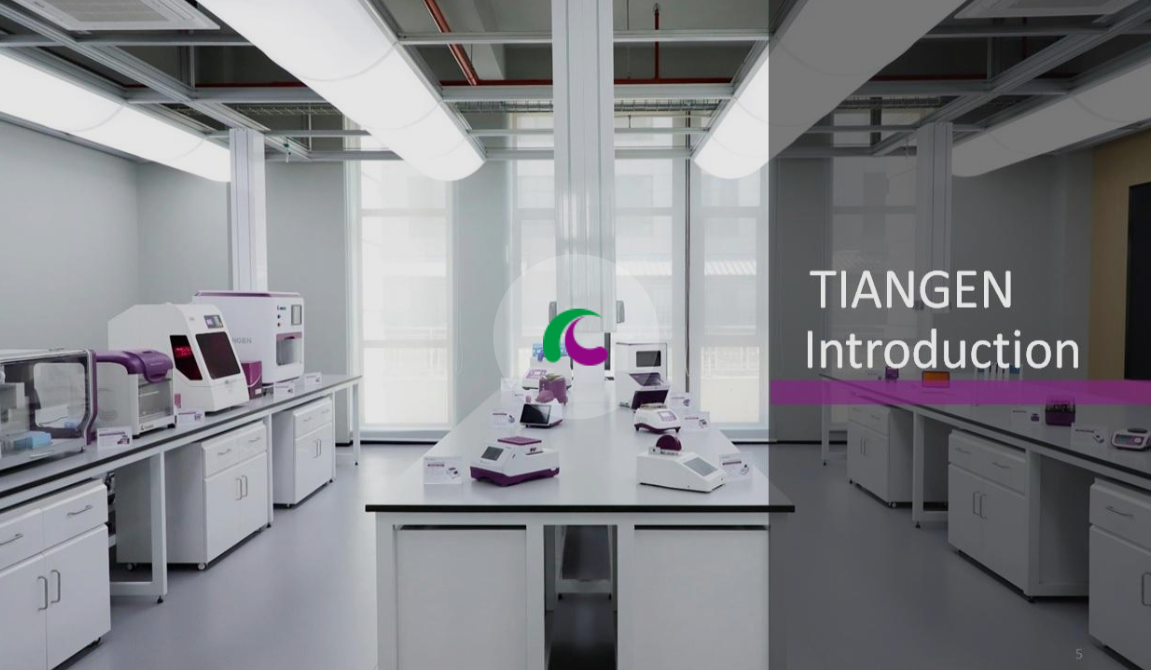
For reliable supplies and validated kits that match these metrics, I often look to partners with transparent protocols and local support; one such partner is TIANGEN.